Hyundai Motor Stock After a 63% Fall: Robots, Car Earnings and What to Watch
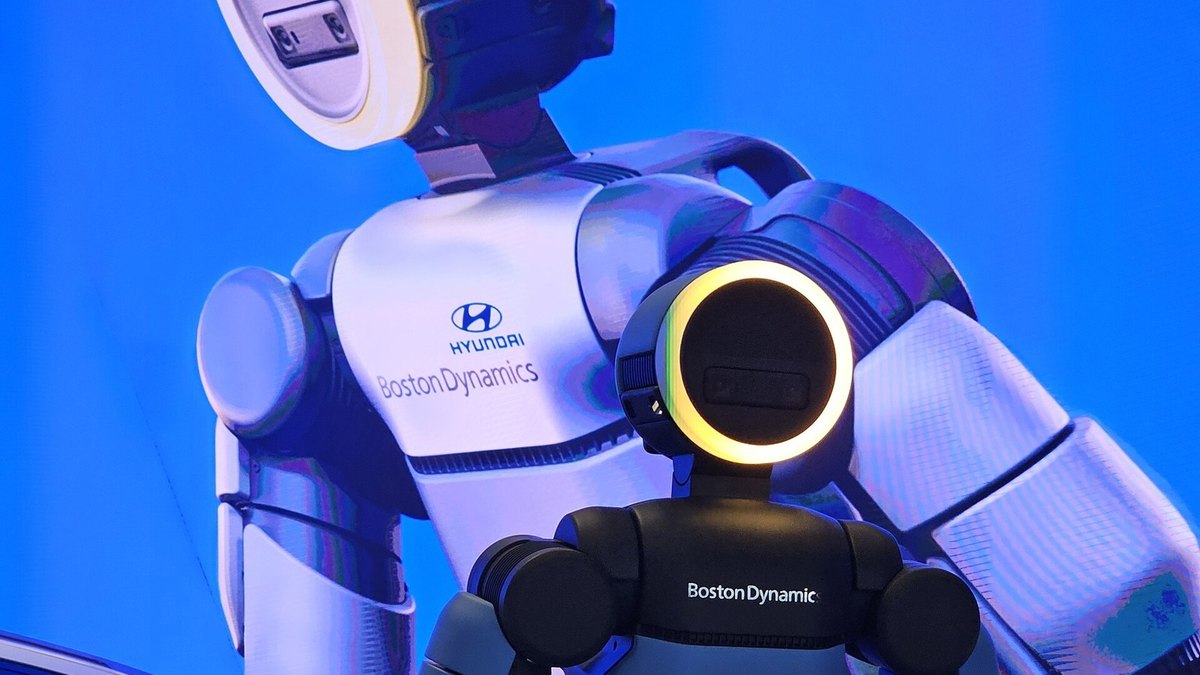
Hyundai Motor's share price has fallen 63% since June 1. The stock closed at ₩750,000 (KRW; about US$556) that day and at ₩275,000 (about $204) on November 10.
The business did not shrink by anything like that. Operating profit for January to September was about $6.0 billion, 18% lower than a year earlier.
How much of the decline reflects the unwinding of a robot premium, and how much reflects weaker auto earnings? And which metrics would indicate that the auto business is stabilizing?
The short answer
The rally from January to June followed robot news, with little change in earnings forecasts. The decline since June coincided with both a fading robot premium and weaker auto results.
- The stock rose 2.5 times in five months after Hyundai Motor Group showed the Atlas humanoid robot. It is now about 7% below where it started the year.
- Hyundai Motor's exposure to Boston Dynamics, which makes Atlas, is indirect and smaller than the rally implied.
- The car business has earned less since US tariffs began in April 2025. This year strikes and falling sales added to that, and in October the company cut its full-year targets.
- At 0.59 times book value the common shares trade well below GM and Ford. The numbers to watch are monthly sales, the fourth-quarter margin and the buyback review.
Contents
The company at a glance
| Ticker | Share price (Nov 10, 2026) | Market cap | Revenue, Jul–Sep 2026 | Operating margin | P/E (trailing) | P/B | |
|---|---|---|---|---|---|---|---|
| Hyundai Motor | 005380.KS; no US listing | ₩275,000 (about $204) | about $41B (common shares) | $33.4B | 5.9% | 8.8x | 0.59x |
| General Motors (US peer) | GM on NYSE | $88.70 | $74.8B | $50.0B | 8.2% (adjusted EBIT) | 21.0x | 1.21x |
| Ford (US peer) | F on NYSE | $12.28 | $49.0B | $49.5B | 5.4% (adjusted EBIT) | n/a (net loss) | 1.35x |
Hyundai Motor (see our stock profile) is the flagship of Hyundai Motor Group, Korea's largest carmaker. It sells Hyundai and Genesis vehicles and owns about a third of Kia (000270.KS), which is listed separately and reports its own results, so a Hyundai share also carries part of Kia's results.
The group as a whole sold 7.27 million vehicles in 2025, third in the world behind Toyota and Volkswagen. That scale is the group's; the share you buy is Hyundai Motor's alone, and in this article share price, profit and valuation refer to that listed company.
Hyundai's P/E uses net profit for July 2025 to June 2026. GM and Ford report adjusted EBIT, which is not the same measure as Hyundai's operating profit, so treat the margin comparison as approximate.
1. What investors were pricing into Boston Dynamics
Hyundai Motor's market cap went from about $44 billion at the end of 2025 to $116 billion at an intraday peak in mid-May 2026. Most of that gain came during a run of robot announcements.
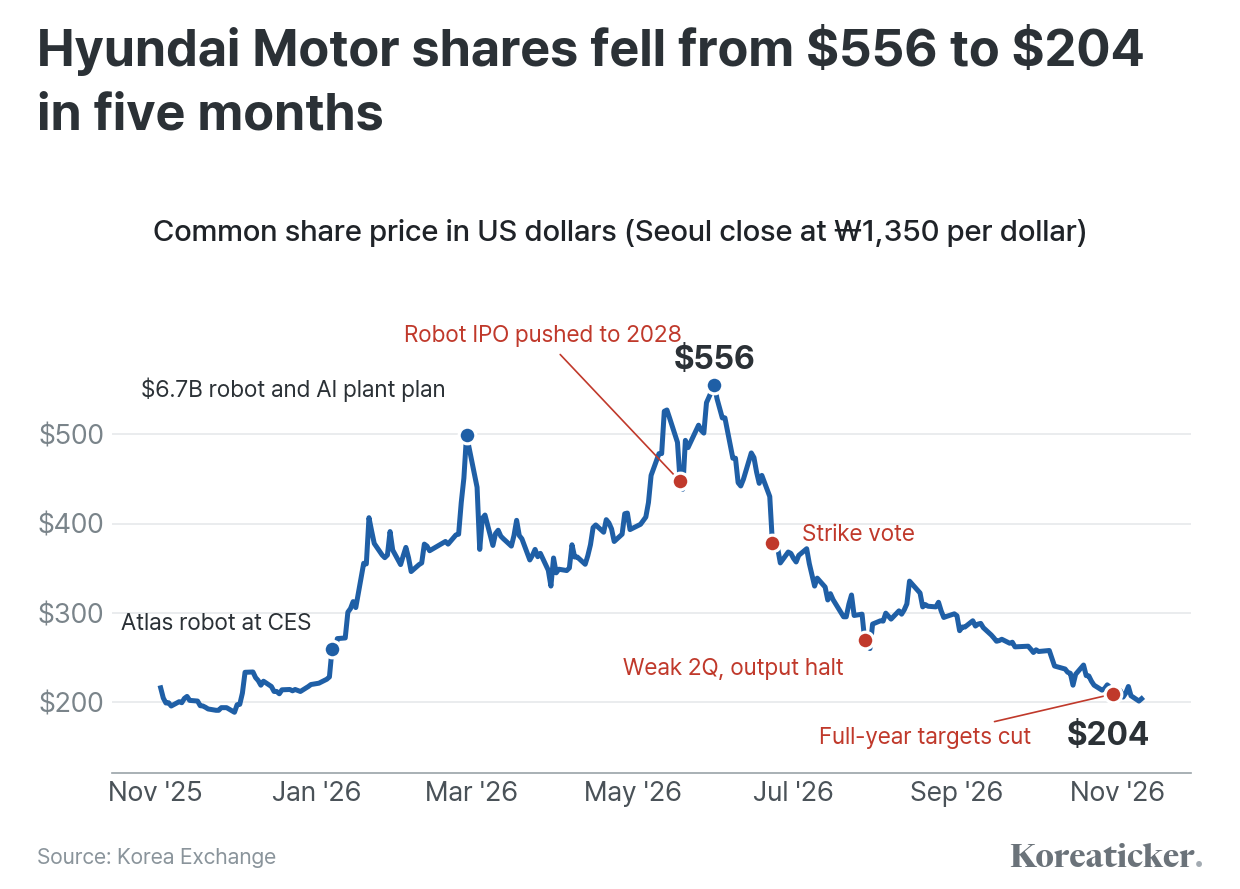
The rally started with a robot. At CES in January 2026, Hyundai Motor Group showed the new Atlas humanoid from Boston Dynamics and announced a partnership with Google DeepMind. The stock rose 69% that month.
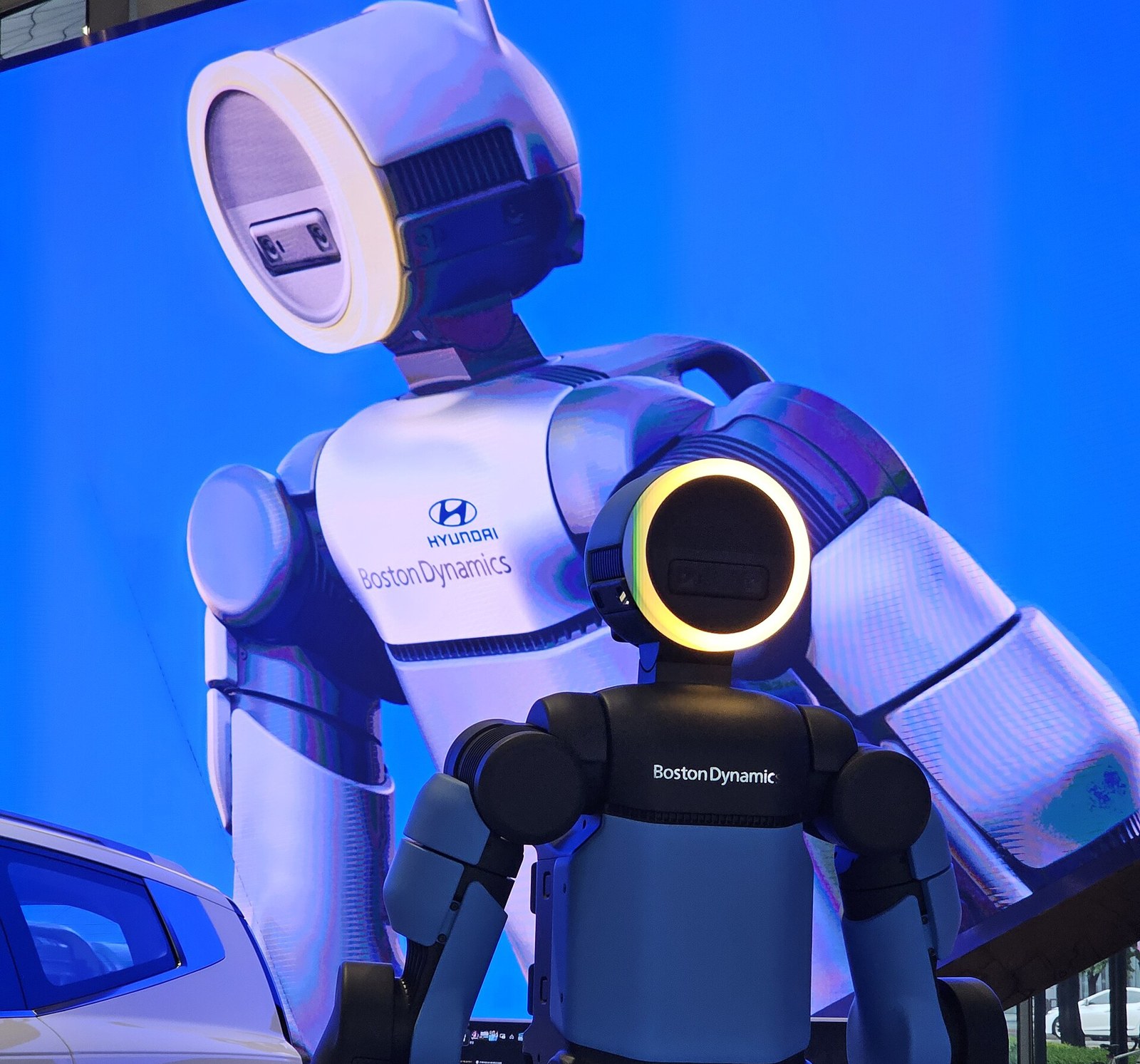
The group said it would be able to build 30,000 Atlas robots a year by 2028 and put them to work at its Georgia plant that year. In February it announced a ₩9 trillion ($6.7 billion) investment in a robot factory and AI data center in Korea.
As enthusiasm spread from AI chips to "physical AI," investors began valuing Hyundai partly as a robotics company. Even in January, Yuanta Securities noted that the share price had jumped while earnings forecasts had barely moved. The robot business had no profit to forecast yet.
Buying Hyundai Motor is not the same as buying Boston Dynamics. The largest shareholder of Boston Dynamics is HMG Global, a US entity funded by Hyundai Motor, Kia and Hyundai Mobis. About a quarter is owned personally by Hyundai chairman Chung Eui-sun.
Hyundai Motor has not disclosed a single figure for its effective stake, so a holder's exposure to any rise in Boston Dynamics' value is partial, and its size is not public.
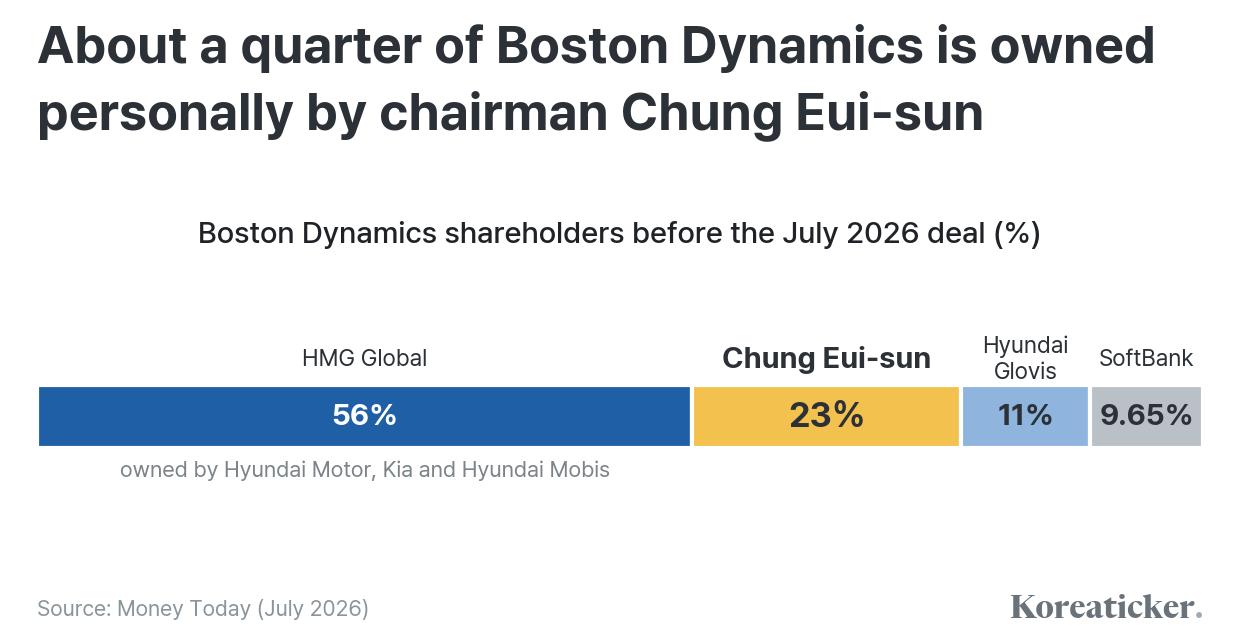
In July 2026 SoftBank sold its last 9.65% to the group. Korean media put the price at about ₩500 billion ($370 million), which would value the whole company at about $3.8 billion.
The ₩500 billion was a pre-agreed option price and says little about what the market would pay. Brokerage estimates of the company's value range from about $7 billion to $74 billion, which shows how hard it is to value.
With estimates that far apart, nobody can say how much of Hyundai's share price the robot business should account for. A holder who bought on robot news was paying for a number no one has pinned down.

The expected IPO timeline also slipped. The market had expected a Boston Dynamics listing in early 2027. In May, a group executive said 2028 would be the right time, and the stock fell 15% in three trading days.
It recovered to a new closing high on June 1, and the sustained decline began after that, so the IPO remark alone does not account for the 63% fall.
2. The auto business since the tariffs
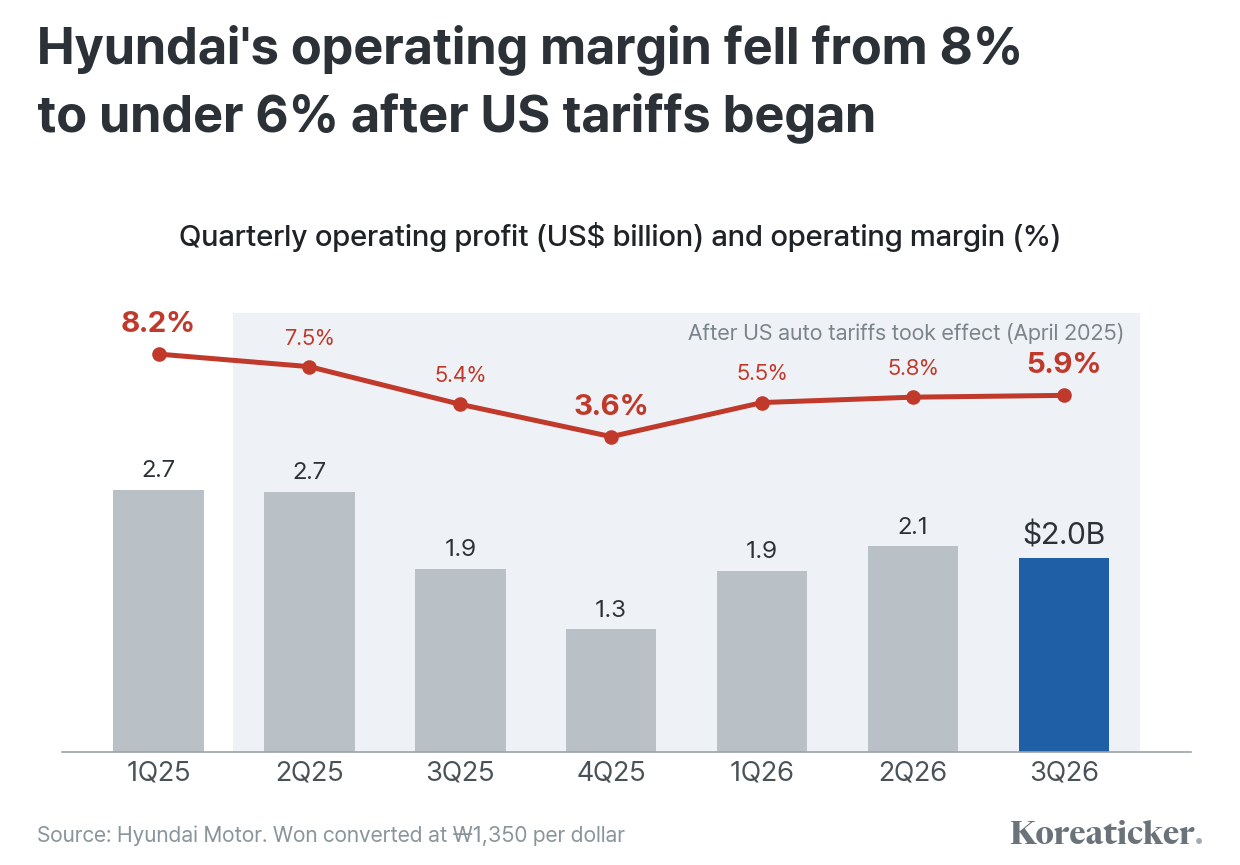
Hyundai's operating margin was above 8% before US tariffs. It fell to 3.6% in the fourth quarter of 2025 and has stayed just under 6% this year.
Annual operating profit has fallen two years in a row, from about ₩15 trillion in 2023 to ₩11.5 trillion ($8.5 billion) in 2025, and this year is on track to be lower again.
The largest documented headwind is the US tariff. The United States put a 25% tariff on imported cars in April 2025 and lowered it to 15% for Korean cars from November 2025.
Hyundai Motor says the tariff cost it about $3.0 billion in 2025 and that contingency measures offset about 60% of the impact. Despite the lower rate, it expects a similar bill in 2026, because it pays for twelve months this year against nine last year. So the tariff keeps weighing on 2026 profit even at the lower rate.
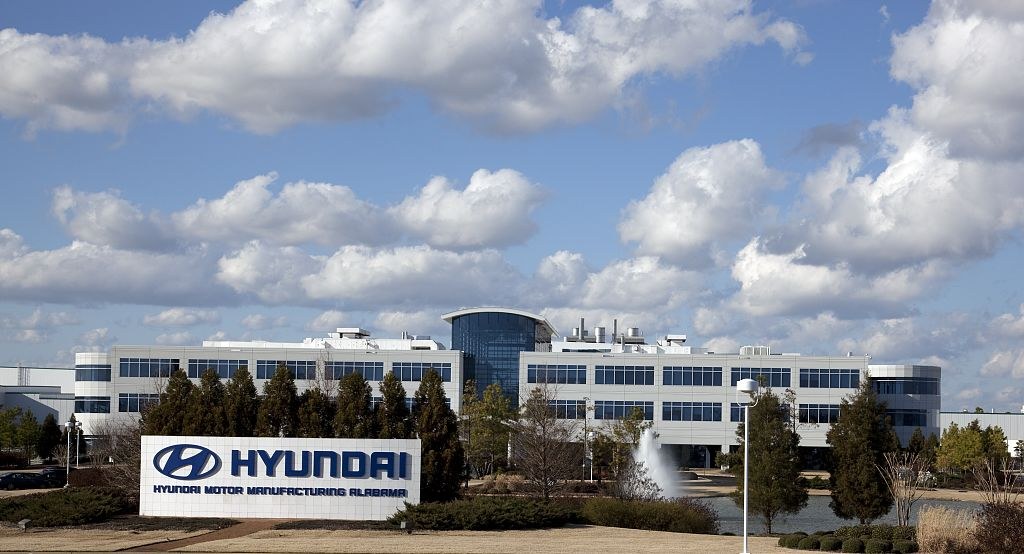
The response is to build more in the United States. Hyundai plans to raise capacity at its new Georgia plant from 300,000 to 500,000 vehicles a year by 2028 and to add hybrids there. Cars built in Georgia do not face the import tariff on finished vehicles, so if they replace imports, that part of the cost shrinks.
Third-quarter operating profit beat forecasts, but what drove it was less encouraging. It rose 5.5% from a year earlier to about $2.0 billion, while revenue fell 3.4%.
A brokerage breakdown cited in Korean media attributes about $1.0 billion of gain to the weaker won and about $0.4 billion to cost cuts, against about $0.8 billion lost to lower volume. The dollar averaged ₩1,423 in the quarter and had fallen into the ₩1,300s by early November, so if the won stays there, the currency comparison turns against Hyundai.
The company then lowered its own targets for 2026:
| Set in January 2026 | Revised in October 2026 | |
|---|---|---|
| Wholesale vehicle sales | 4,158,300 | 4,000,000 |
| Operating margin | 6.3–7.3% | 5.5–6.5% |
| Auto capital spending | ₩17.8 trillion | ₩16 trillion |
It had confirmed the margin target at its investor day in August, two months earlier. It also said it would review its plan to buy back ₩4 trillion (about $3 billion) of shares over three years, without saying the plan will be cut.
So the company now expects to earn less on each car than it said in August, and part of the cash it planned to hand back to shareholders is under review.
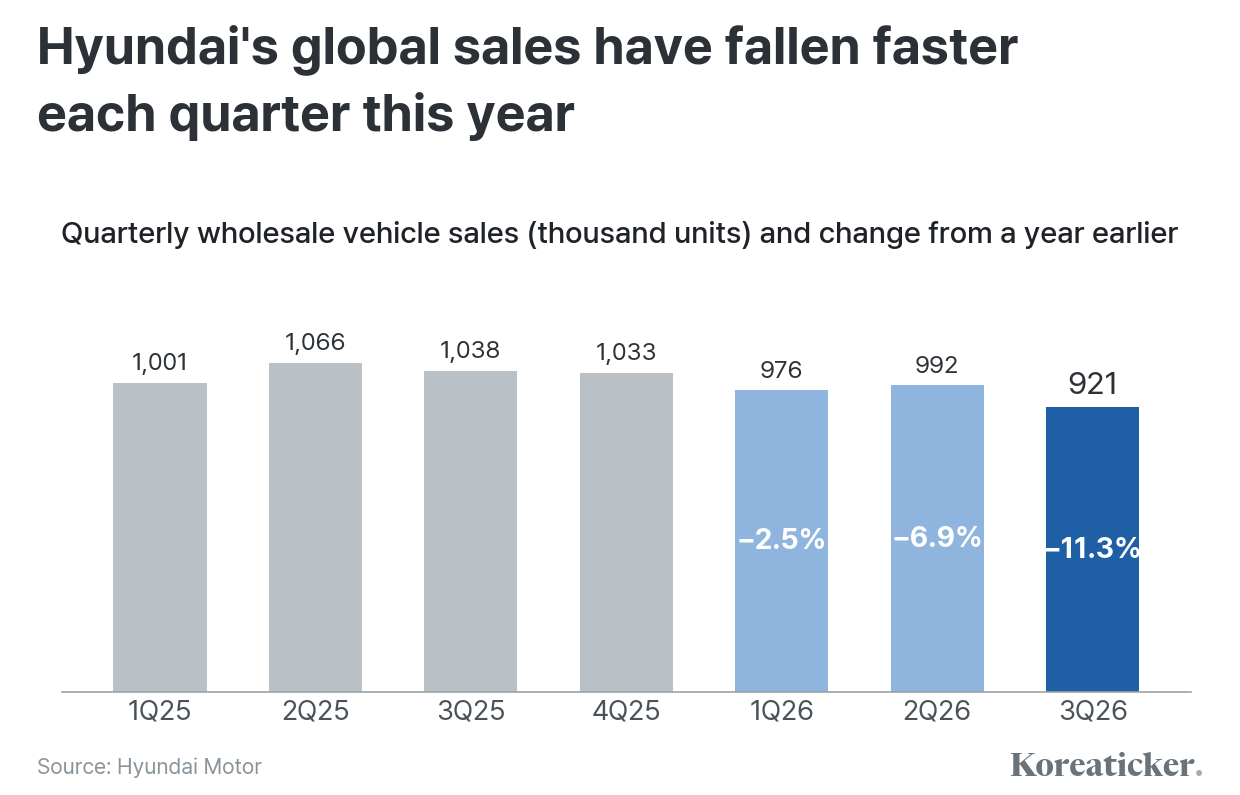
Hyundai is selling fewer cars. Wholesale sales, meaning vehicles shipped to dealers, have fallen from a year earlier for 13 months in a row through October.
- Korea: 131,000 vehicles in the third quarter, down 27%, after 111 days of wage talks and partial strikes
- Europe: Hyundai-brand sales down more than 13% in January to September, while the market grew 6%
- United States: 771,000 vehicles in January to October, up 3%; hybrids were 29% of October sales
The new 4 million target still looks hard to reach. Hyundai sold 2.89 million vehicles through September, so it needs 1.11 million in the fourth quarter. It has not sold a million in any quarter this year.
3. Valuation against GM, Ford and Toyota
Hyundai trades at lower multiples than the US peers in the table above. Toyota (TM), the closest global peer, trades at about 10 times earnings and 1.0 times book.
Carmakers differ in their finance arms, capital structure and accounting, so price-to-book comparisons between them are rough. Even with those caveats, a Hyundai buyer pays less for each dollar of book value than a GM, Ford or Toyota buyer does.
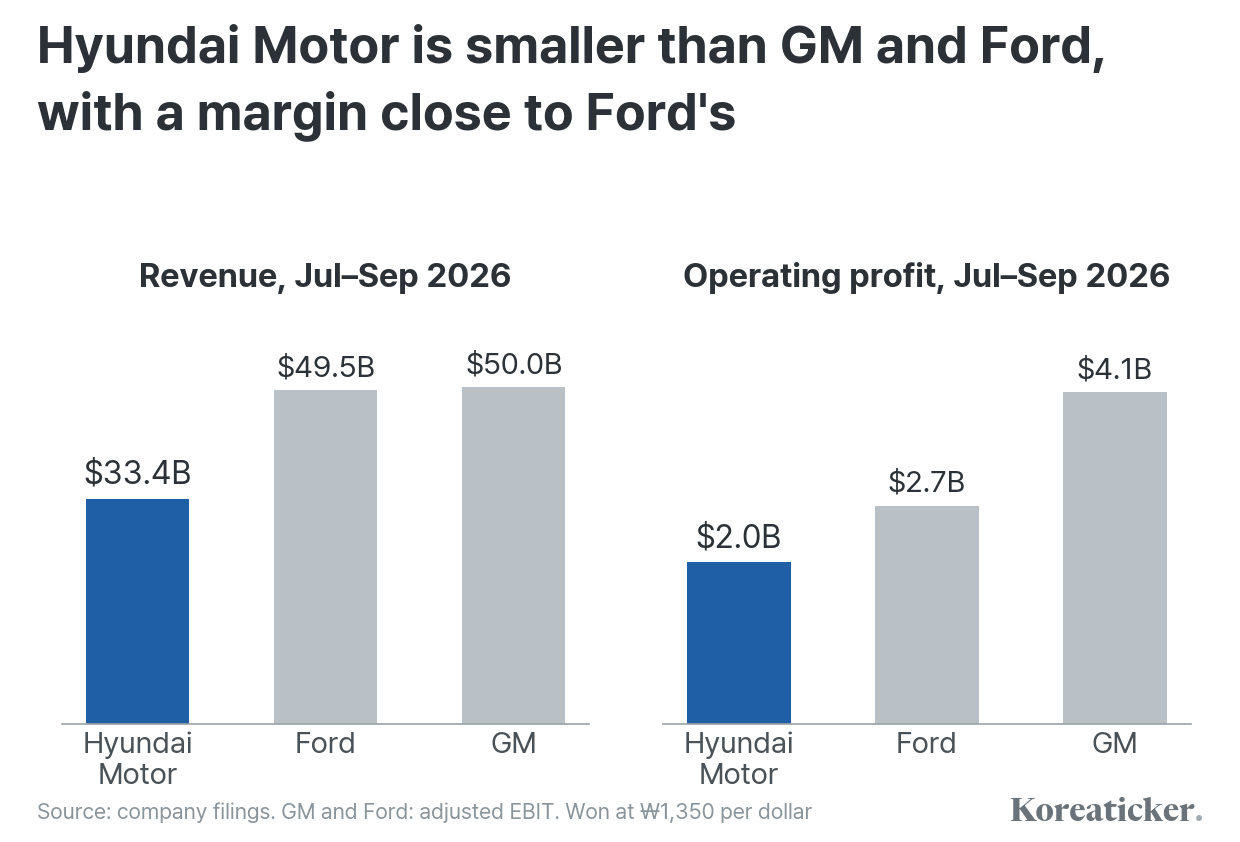
Peers moved the other way this quarter. Toyota raised its operating profit forecast for the year to March 2027 from ¥3.4 trillion to ¥3.9 trillion, and Ford raised the low end of its guidance.
Both also face US tariffs, so the tariff alone does not explain Hyundai's cut. Hyundai has its own pressures, such as the Korean strikes and weaker European sales, though the figures here do not show how much each one mattered.
The dividend gives a yield of 3.6% on the common shares. Hyundai has promised at least ₩10,000 a share each year and pays ₩2,500 a quarter.
The dividend was ₩12,000 for 2024 and was cut to ₩10,000 for 2025 as profit fell. If you buy for income, count on ₩10,000 and treat anything above it as dependent on profit, as the 2025 cut showed.
Hyundai also has preferred shares, which US investors rarely see. Korean preferred shares carry no vote and pay a slightly higher dividend. Hyundai has three classes; the most traded, the second preferred (005387.KS), closed at ₩145,400 (about $108) on November 10, for a yield of 6.9% on the minimum dividend.
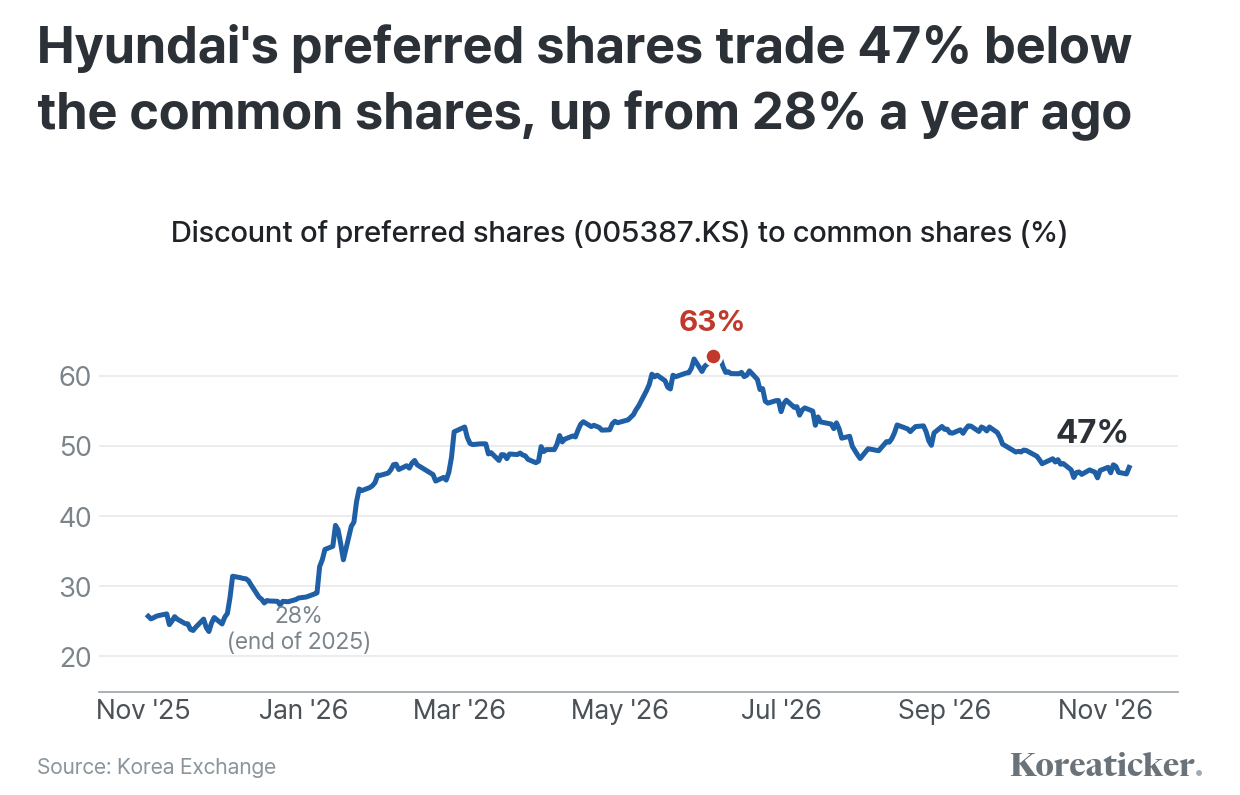
The discount was 28% at the end of 2025, reached 63% in June and is 47% now. Since the start of the year the common shares are down about 7% and the preferred shares 32%.
In my view this shows that robot enthusiasm was concentrated in the common shares, because the preferred shares rose much less during the rally. The preferred shares differ in voting rights, dividends and liquidity, so the gap is a rough guide and not a clean measure of any robot premium.
Foreign ownership fell throughout. Foreign investors held 35.7% of the common shares in November 2025 and 24.0% in November 2026, and they were net sellers of ₩3.2 trillion ($2.4 billion) in January alone, while the price was still rising. Foreign funds were selling into the rally, before the decline began.
4. Three numbers to watch
The share price is back below where it was before the robots. The open question is when car profits start growing again.
The timing suggests that robot expectations drove much of the rally, though the evidence does not allow a precise split. Car profits are easier to track:
- Monthly sales: whether the 13-month run of declines ends
- Fourth-quarter margin: whether Hyundai can hold a margin near 6% without help from the exchange rate
- Shareholder returns: what comes out of the review of the ₩4 trillion buyback
One caution on the fourth quarter. Operating profit a year earlier was only ₩1.7 trillion, a 3.6% margin, so the year-on-year growth rate will look strong almost whatever happens. What matters is whether the improvement comes from selling more cars. Atlas is not due on the factory floor until 2028.
For US investors
How to buy this stock from the US
Ticker, dollar price and valuation in one place: Hyundai Motor stock profile.
Step-by-step guide: this guide.
Sources and notes
- Hyundai Motor, 2025 annual and 1Q–3Q 2026 earnings releases (2026.01–2026.10)
- Hyundai Motor, annual and half-year reports filed with DART (2026.03, 2026.08)
- Hyundai Motor Group, CES 2026 AI robotics announcement (2026.01)
- Hyundai Motor America, October 2026 sales release (2026.11)
- Hyundai Motor IR notices on GDR delisting (2024.10, 2024.12); Citi depositary receipt notice
- Asia Economy, brokerage target changes after 3Q results (2026.11)
- iNews24, 3Q 2026 earnings call coverage (2026.10)
- Money Today, Boston Dynamics ownership (2026.07); Maeil Shinmun, IPO timing remarks (2026.05)
- Newsis, Yuanta and Kiwoom analyst comments (2026.07)
- Yonhap, ACEA European sales for January to September (2026.10)
- GM, Ford and Toyota third-quarter 2026 results (2026.10–2026.11)
- StockAnalysis.com, US share prices, P/E, P/B and EWY holdings (checked 2026.11.10)
Won converted at ₩1,350 per dollar. Hyundai results from DART filings and company releases. P/E and P/B use net profit and equity attributable to shareholders, divided across common and preferred shares; market value is common shares only.
Share prices are Korea Exchange closes on Nov 10, 2026 and NYSE closes on Nov 10, 2026. GM and Ford operating profit is adjusted EBIT as reported.
Photos from Wikimedia Commons: Damian B Oh, MercurySable99 (CC BY-SA 4.0), Carol M. Highsmith (public domain).
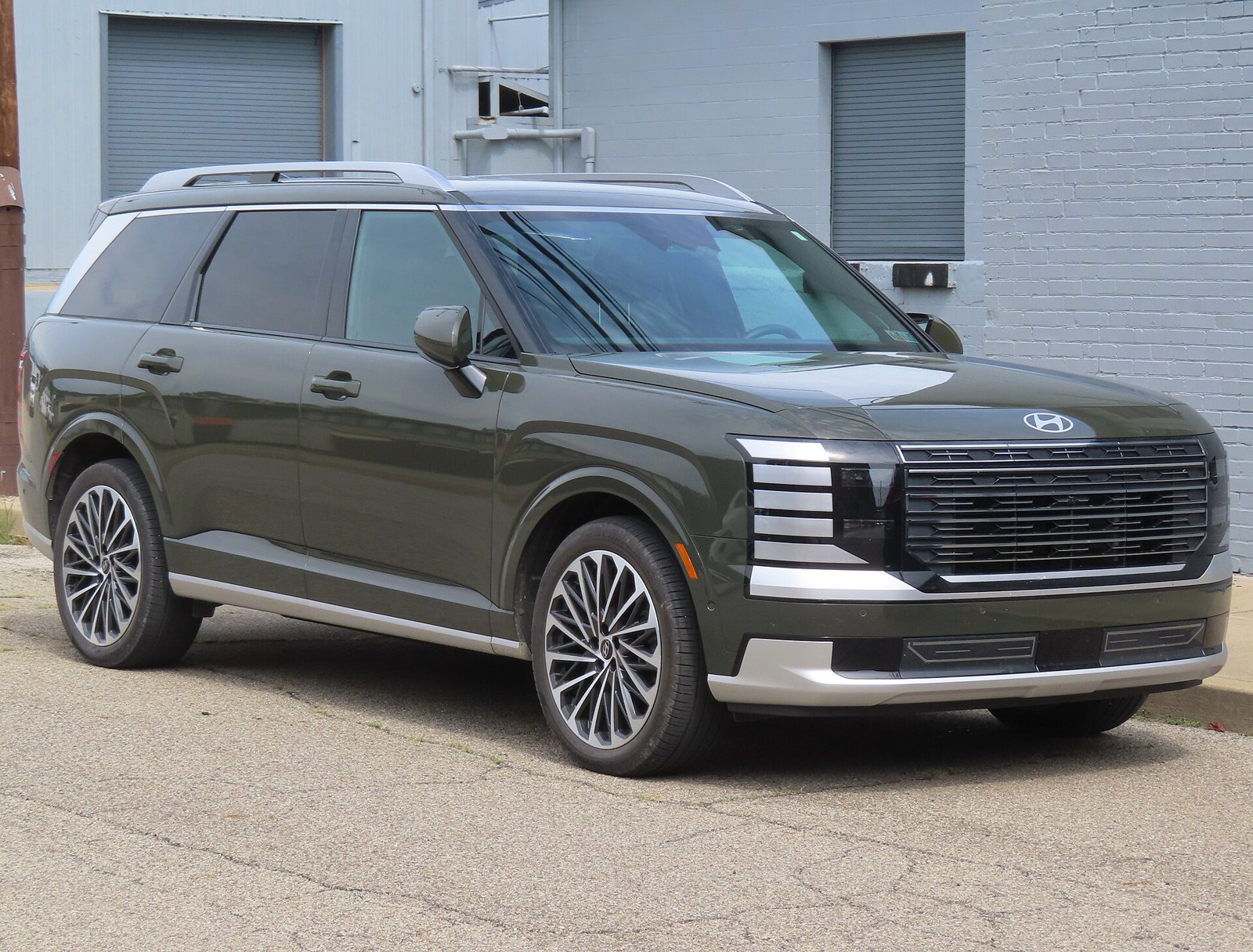
Cover photo: the 2026 Palisade, by MercurySable99, credited above.
For information only, not investment advice. See our full disclaimer.
Update history
- Nov 14, 2026 Softened a line that tied Hyundai's lowered targets to company-specific problems, said what the company profile means for a holder, and reworded several shareholder lines after a reader-impression review. No figures changed.
- Nov 13, 2026 Added what each finding means for Hyundai Motor shareholders: the indirect Kia and Boston Dynamics stakes, what the wide Boston Dynamics valuations mean, why the tariff still weighs in 2026, what the lowered targets and the buyback review mean for returns, how the multiples compare, why peers raised forecasts while Hyundai cut, what the dividend floor means and how foreign ownership fell.
Corrections and changes to facts are listed here. See our editorial policy.