KDEF ETF Holdings, Fees and Risks
KDEF is a US-listed ETF built around Korean defense stocks. We found no NYSE or Nasdaq listing for any of Korea's large defense contractors, so for a US investor without Korea Exchange access, a fund like this is one way to reach them, in dollars and during US hours.
What you get for that convenience is less Hanwha Aerospace than the name might suggest. The four large contractors together are about 38% of the fund, and the rest is spread across other companies, many of them small suppliers.
KDEF at a glance
| Full name | PLUS Korea Defense Industry Index ETF |
|---|---|
| Ticker | KDEF on NYSE Arca |
| Listed | February 5, 2025 |
| Adviser and index | Exchange Traded Concepts; index from Hanwha Asset Management |
| Expense ratio | 0.65% |
| Assets | about $79 million |
| Share price (close) | $29.59 |
| Price date | Nov 10, 2026 |
| Holdings | The index targets 20 stocks, and no stock can exceed 20% of the index; it is rebalanced quarterly, and weights can drift in between |
The 0.65% fee comes to about $65 a year on a holding that stays at $10,000. It is taken out of the fund's assets rather than billed to you, and it applies whether the fund rises or falls.
What is inside
| Weight | What it makes | Profile | |
|---|---|---|---|
| Hanwha Aerospace | 18.92% | K9 howitzers, Chunmoo launchers, engines | Profile |
| Korea Aerospace Industries | 6.94% | FA-50 and KF-21 jets | Profile |
| Hyundai Rotem | 6.39% | K2 tanks | Profile |
| LIG Defense & Aerospace | 5.62% | Cheongung-II and other missiles | Profile |
| SNT Motiv | 5.28% | Small arms, motors | |
| SK oceanplant | 5.19% | Naval and offshore structures | |
| SNT Dynamics | 5.04% | Transmissions, artillery parts | |
| Poongsan | 4.39% | Ammunition, copper | |
| Satrec Initiative | 4.13% | Satellites | |
| Samhyun | 4.12% | Motors and actuators |
Weights are as of November 6, 2026. The top ten make up about 66% of the fund.
Hanwha Aerospace is the largest holding at 18.9%. At that weight, a 10% move in Hanwha's share price moves the fund by about 1.9%, all else equal, so good news for Hanwha alone shows up only in part.
The other 62% sits outside the four large contractors, in companies such as Poongsan and Satrec Initiative. A KDEF holder is therefore betting on the wider Korean defense supply chain, and a quarter in which the big contractors do well while the rest lag would leave the fund behind them.
The 20% cap and quarterly rebalance keep any one stock from taking over. Weights change daily between rebalances, so check the date on any holdings table, this one included.
What the risks mean for a holder
The fund is small. It has about $79 million in assets. Check current volume and the quoted spread before trading, because a wide spread is a trading cost on top of the 0.65% yearly fee.
It has fallen with its holdings. KDEF is down about 32% in 2026 and about 56% from its 52-week high of $67.41. Those are price changes and exclude distributions. By our arithmetic on price alone, a buyer at that high needs the price to more than double to get back to even.
The won moves your return. The holdings are priced in won, so a weaker won lowers the fund's dollar value even if Seoul prices hold, and a stronger won lifts it.
You trade while Seoul is closed. The fund trades in New York after the Seoul market has shut, so its market price can sit above or below the fund's last reported net asset value. A buyer can pay more than that value, or sell for less.
Why the stocks fell is covered in Korean Defense Stocks: Why Shares Fell 50% to 73% in 2026.
KDEF against other ways to own Korean defense
| Route | What you get | Main catch |
|---|---|---|
| KDEF | About 20 Korean defense stocks in one US ticker | Small fund; 0.65% a year plus your trading costs |
| Seoul shares | Any single company, such as Hanwha Aerospace (012450) | Needs a broker with Korea Exchange access; trades overnight in US time |
| EWY | Broad Korea exposure | Only about 1.1% in Hanwha Aerospace; 43% in Samsung Electronics and SK hynix |
Of the three, only Seoul shares let you own a single contractor, while KDEF holds the sector without making you pick names. EWY is a broad Korea fund: about 1.1% sits in Hanwha Aerospace and 43% in Samsung Electronics and SK hynix, so its return leans on those two companies rather than on Hanwha.
How direct purchase works is in How to Buy Korean Stocks from the US.
Sources and notes
- StockAnalysis.com, KDEF overview and holdings (holdings as of 2026.11.06, price as of 2026.11.10)
- Exchange Traded Concepts, KDEF launch announcement (2025.02)
- StockAnalysis.com, EWY holdings (as of 2026.11.09)
- SEC, KDEF summary prospectus (2026.03.30), for index rules and principal risks. sec.gov
Performance figures are price changes calculated from StockAnalysis.com data and exclude distributions. Holdings weights are from StockAnalysis.com and can differ by about 0.01 percentage point from the fund manager's own figures. The summary prospectus gives the start of operations as February 4, 2025; the manager's site shows an inception date of February 5, 2025.
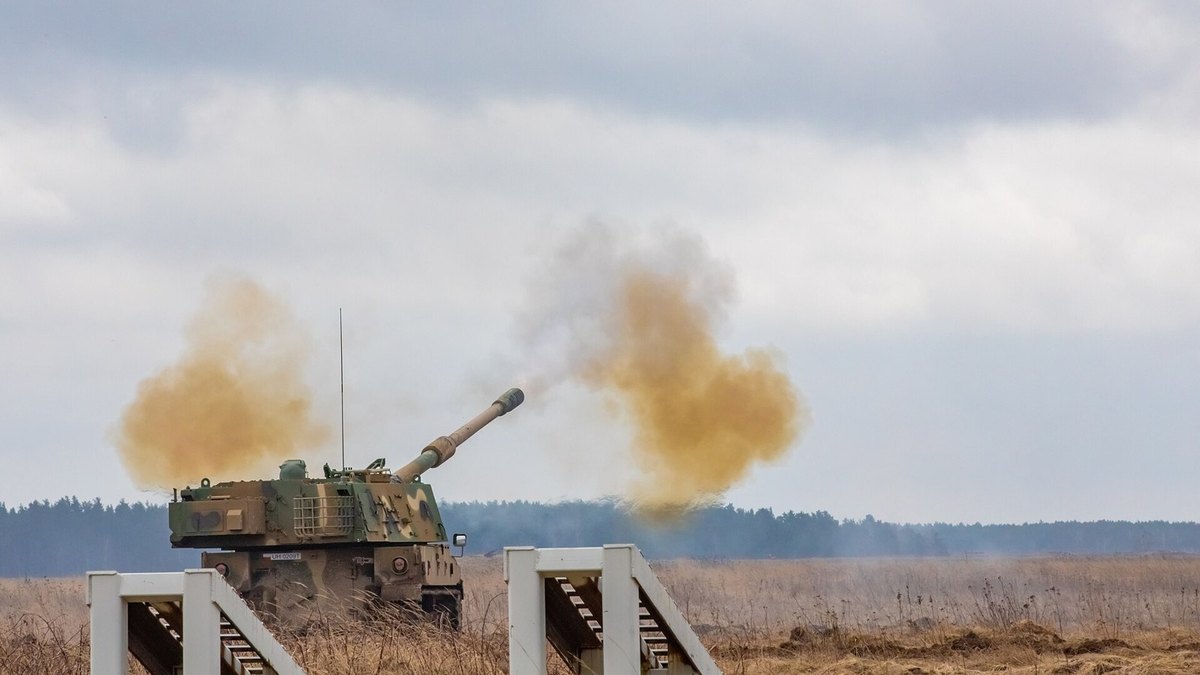
Cover photo: a Polish K9 howitzer during a live-fire demonstration, by Staff Sgt. Matthew Foster, US Army, public domain, via Wikimedia Commons.
For information only, not investment advice. See our full disclaimer.
Update history
- Nov 13, 2026 Rewrote each section around what KDEF means for a US holder: how the weights tie your return to smaller suppliers, what the fee and fund size cost, what the 2026 drop and the overnight pricing gap mean, and what EWY or Seoul shares give instead.
Corrections and changes to facts are listed here. See our editorial policy.