Korean Defense Stocks: Why Shares Fell 50% to 73% in 2026
Contents
- 1The companies at a glance
- 2New export orders slowed in 2026
- 3Third-quarter earnings: three of four missed
- 4How the stocks reacted to Iran-war headlines
- 5Backlogs still cover three to seven years of revenue
- 6Delivery speed, price and Europe's local-content rules
- 7Against defense stocks elsewhere
- 8What to watch
- 9How US investors can access these stocks
By late October, all four of Korea's major listed defense contractors were at least 50% below their 2026 highs. Did they run out of work?
They did not. Hanwha Aerospace, Hyundai Rotem, Korea Aerospace Industries (KAI) and LIG Defense & Aerospace (formerly LIG Nex1; LIG D&A in this article) hold order backlogs equal to about three to seven years of revenue. That range is rough: two of the figures cover only the defense side and two the whole company (section 4).
What changed was the flow of new business: large new contracts slowed sharply, three of the four missed third-quarter profit forecasts, and headlines about an end to the war in Iran coincided with several sharp selloffs.
If you own one of these stocks, you want to know how long the existing orders can carry earnings, and what has to be signed for the order books to stop shrinking.
The companies at a glance
| Ticker | Share price (Nov 10, 2026) | Below 2026 high | Market cap | P/E (trailing) | P/B | |
|---|---|---|---|---|---|---|
| Hanwha Aerospace | 012450.KS | ₩659,000 (about $488) | 57% | about $25B | 16.8x | 2.8x |
| Hyundai Rotem | 064350.KS | ₩73,100 (about $54) | 73% | about $5.9B | 9.9x | 2.3x |
| KAI | 047810.KS | ₩101,200 (about $75) | 50% | about $7.3B | 55.6x | 5.2x |
| LIG D&A | 079550.KS | ₩339,000 (about $251) | 67% | about $5.5B | 25.9x | 4.6x |
None of the four is listed in the United States, so a US holder owns them as Seoul shares priced in won. Their dollar value moves with the exchange rate as well as the share price. Dollar figures here use a fixed ₩1,350 per dollar.
- Hanwha Aerospace makes the K9 self-propelled howitzer and the Chunmoo rocket launcher. Its consolidated results also include Hanwha Ocean, a shipbuilder.
- Hyundai Rotem makes the K2 tank and also builds trains. Defense is about half of revenue and almost all of its profit.
- KAI is Korea's only maker of military aircraft: the FA-50 light fighter and the new KF-21. It also supplies airframe parts to Boeing and Airbus.
- LIG D&A makes missiles, including the Cheongung-II air defense system sold to the UAE, Saudi Arabia and Iraq.
The P/E ratios use net profit for July 2025 to June 2026. Hanwha Aerospace and LIG D&A both reported net losses for the third quarter, so their ratios will look higher once those results are filed. Today's P/E for those two is built on profits from before the losses.
For scale, Lockheed Martin (LMT) is worth about $139 billion and General Dynamics (GD) about $99 billion; both trade at about 21 times trailing earnings. Hanwha Aerospace and Hyundai Rotem now trade at lower multiples than the two US contractors. KAI and LIG D&A still trade at higher ones.
1. New export orders slowed in 2026
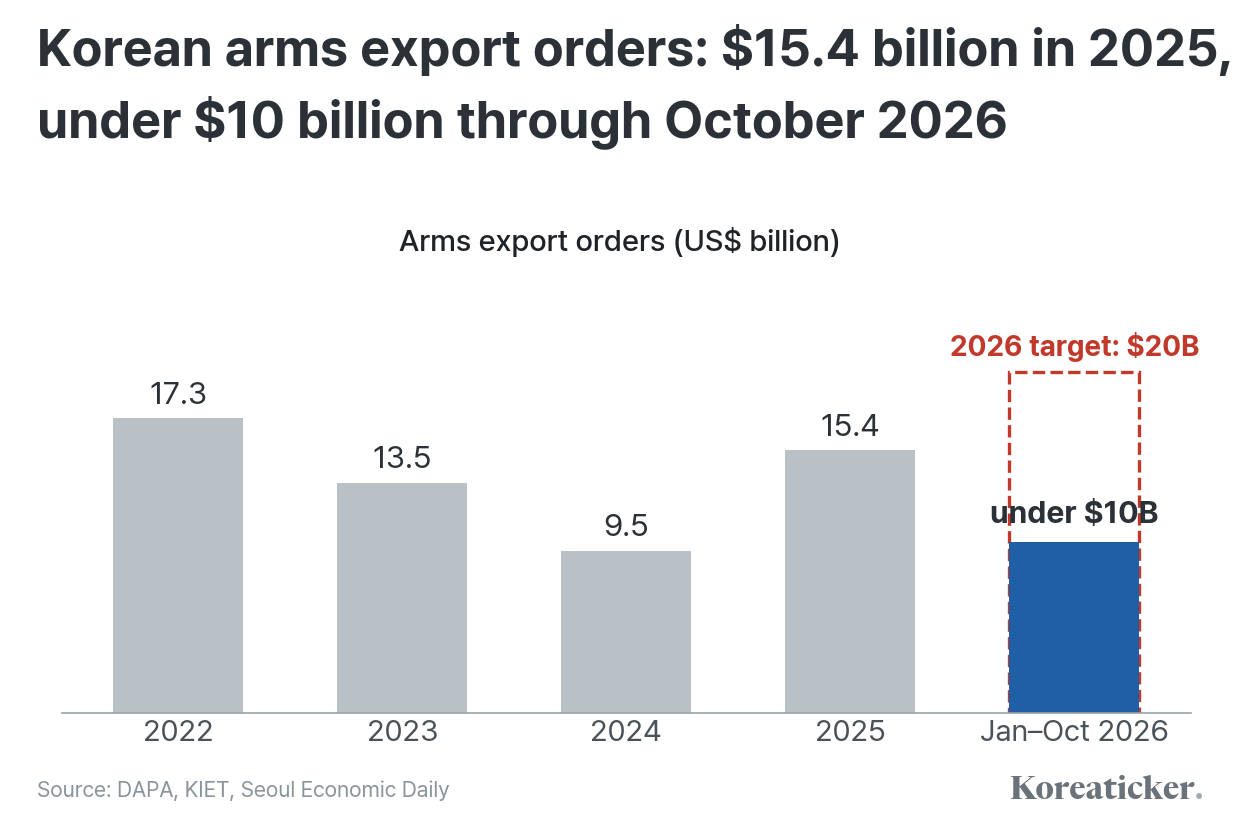
Korea booked $15.4 billion of arms export orders in 2025. The 2026 target is $20 billion, and orders through October were under $10 billion.
Korea is the world's ninth-largest arms exporter, with 3.0% of global arms transfers in 2021 to 2025 by SIPRI's measure. The business depends heavily on one customer: Poland took 58% of Korea's exports over those five years, so the timing of Polish contracts matters to the companies that supply them.
In 2022 Poland ordered 180 K2 tanks, 212 K9 howitzers, 218 Chunmoo launchers and 48 FA-50 jets. A second K2 contract worth about $6.5 billion followed in August 2025. Three of the four companies here supply those Polish contracts; LIG D&A does not.
Nothing of that size has been signed in 2026. Through October there were six export contracts above ₩100 billion, worth about $3.3 billion in total, against $12.6 billion for the same count in 2025. Less new work entering the backlogs is one reason two of them have started to shrink (section 4), alongside deliveries that keep drawing them down.
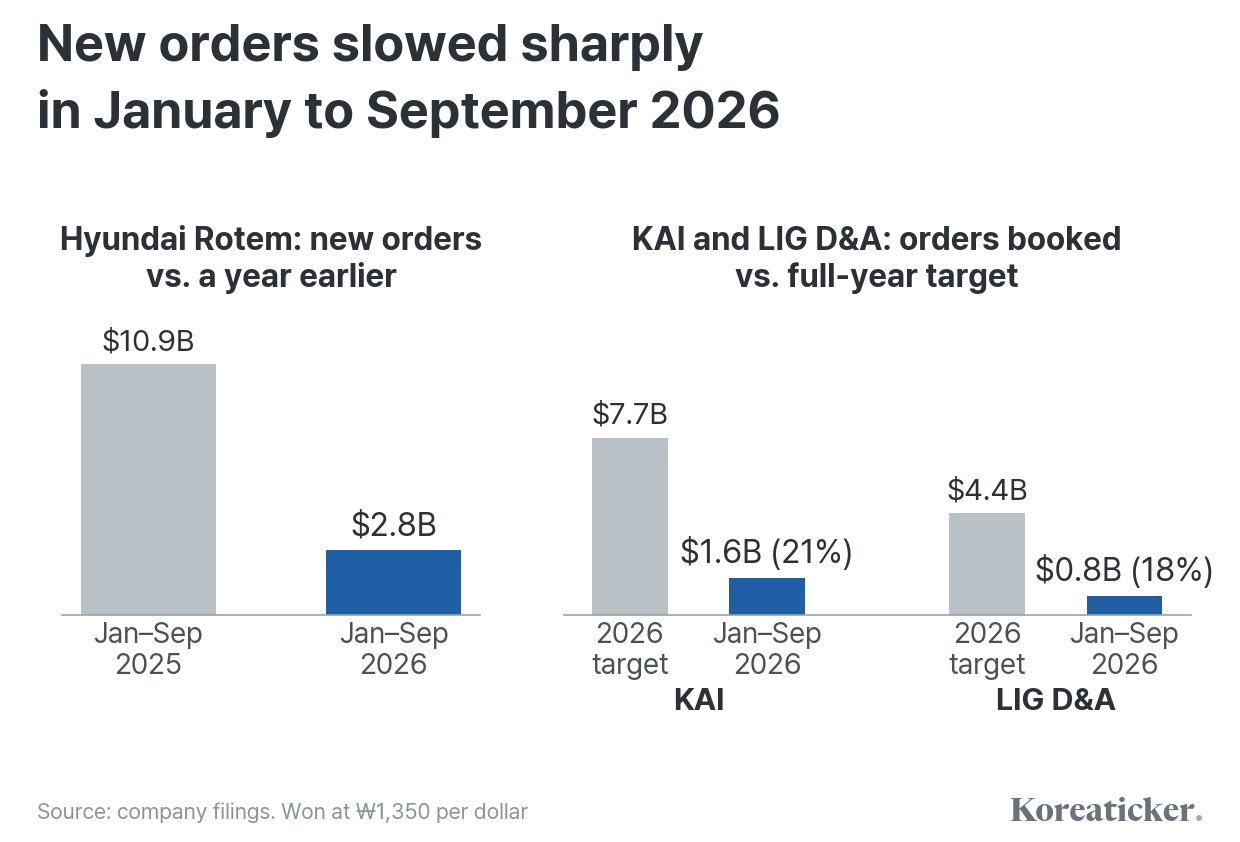
Hyundai Rotem's new orders for January to September fell 74% from a year earlier. KAI had booked 21% of its full-year order target by the end of September, and LIG D&A about 18% of a target it raised during the year.
Large weapons orders are usually delivered over several years, so a weak order year shows up in the backlog before it shows up in revenue.
Several expected contracts slipped or went elsewhere:
- Poland, third K2 contract: brokerages now expect it in 2027
- Canada, submarines: Germany's TKMS was named preferred bidder in July; Hanwha Ocean is the reserve
- Romania, infantry fighting vehicles: awarded to Rheinmetall in April over Hanwha's Redback
- US Navy jet trainer: KAI and Lockheed Martin decided not to bid
None of these was in the backlog yet. If a deal like Poland's slips, the work arrives later than holders hoped. If a bid is lost, that work is gone from the list. Canada matters to Hanwha Aerospace holders too, because Hanwha Ocean's results are consolidated into Hanwha Aerospace's.
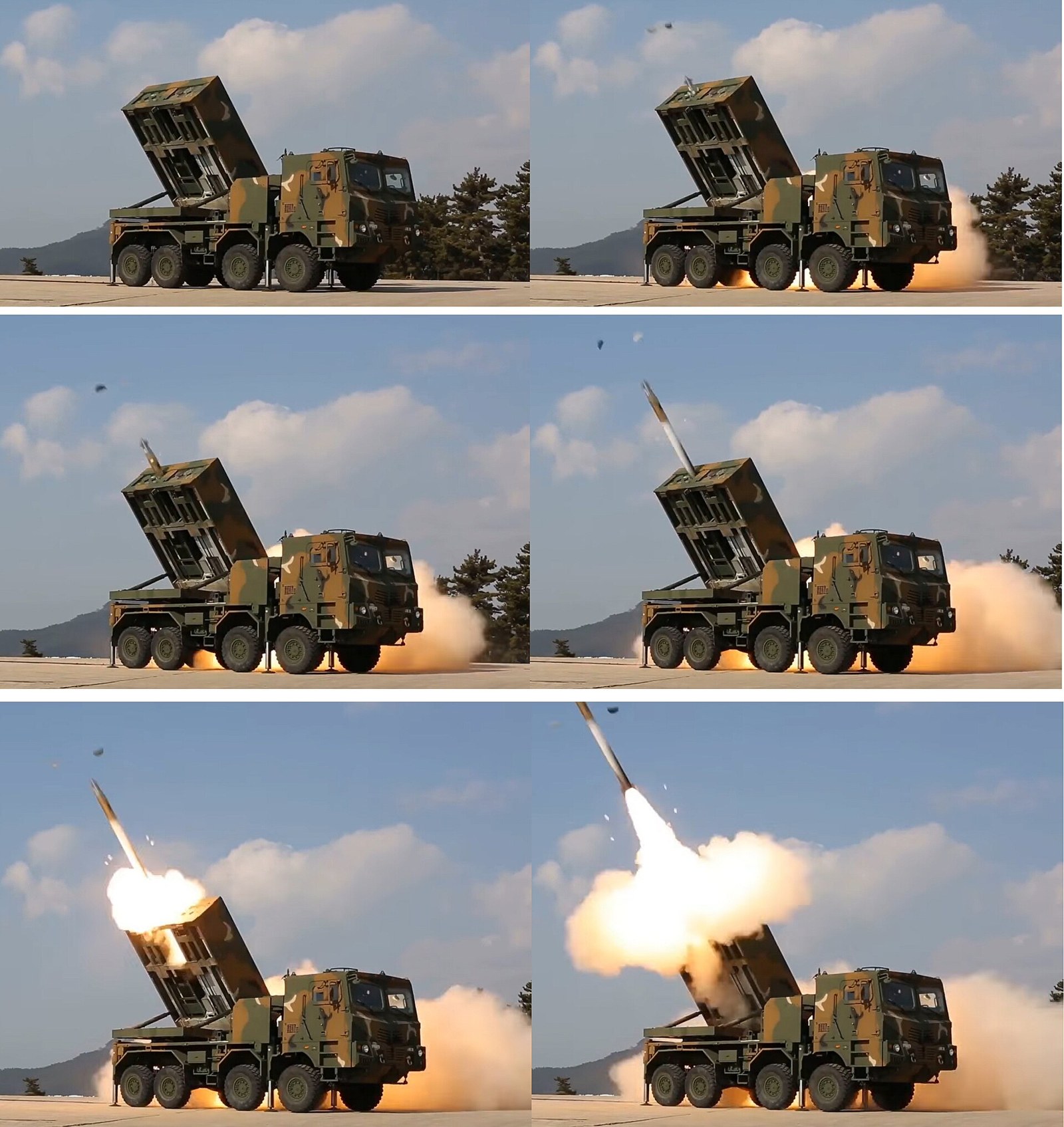
There were wins. Norway and Croatia chose Chunmoo, Finland and Spain ordered more K9s, and Hanwha won a US Army contract to supply prototype howitzers for evaluation. Each is worth around $1 billion or less. Each adds work, but one at that size is a fraction of the $6.5 billion second K2 contract.
2. Third-quarter earnings: three of four missed
Third-quarter operating profit fell 46% from a year earlier at Hanwha Aerospace, 25% at LIG D&A and 11% at Hyundai Rotem. It rose 32% at KAI.
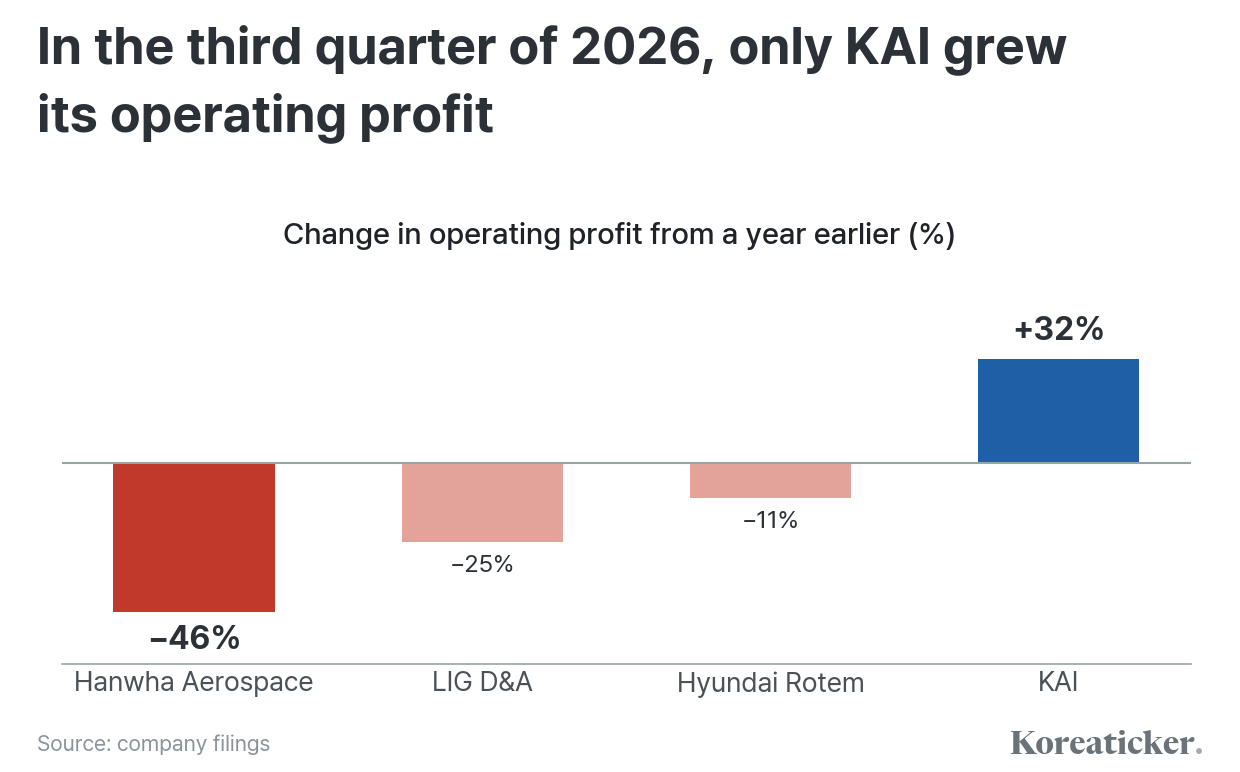
The biggest drop was at Hanwha Aerospace. Operating profit in its land systems division fell from about $424 million a year earlier to about $16 million.
The company said K9 deliveries to Poland were pushed into the fourth quarter and that it booked costs from a fatal explosion at its Daejeon plant in June. If the deliveries arrive as planned, some of the shortfall may reverse in the fourth quarter.
Several companies also pointed to the stronger won. Arms exports are paid in dollars, so a stronger won lowers revenue and profit in won terms on the same deliveries. LIG D&A said the exchange rate cut its export margin by about 5 percentage points.
Of the four, LIG D&A is the one quoted here with a number. The other exporters face the same pressure to the extent their contracts are in dollars, and a weaker won would ease it.
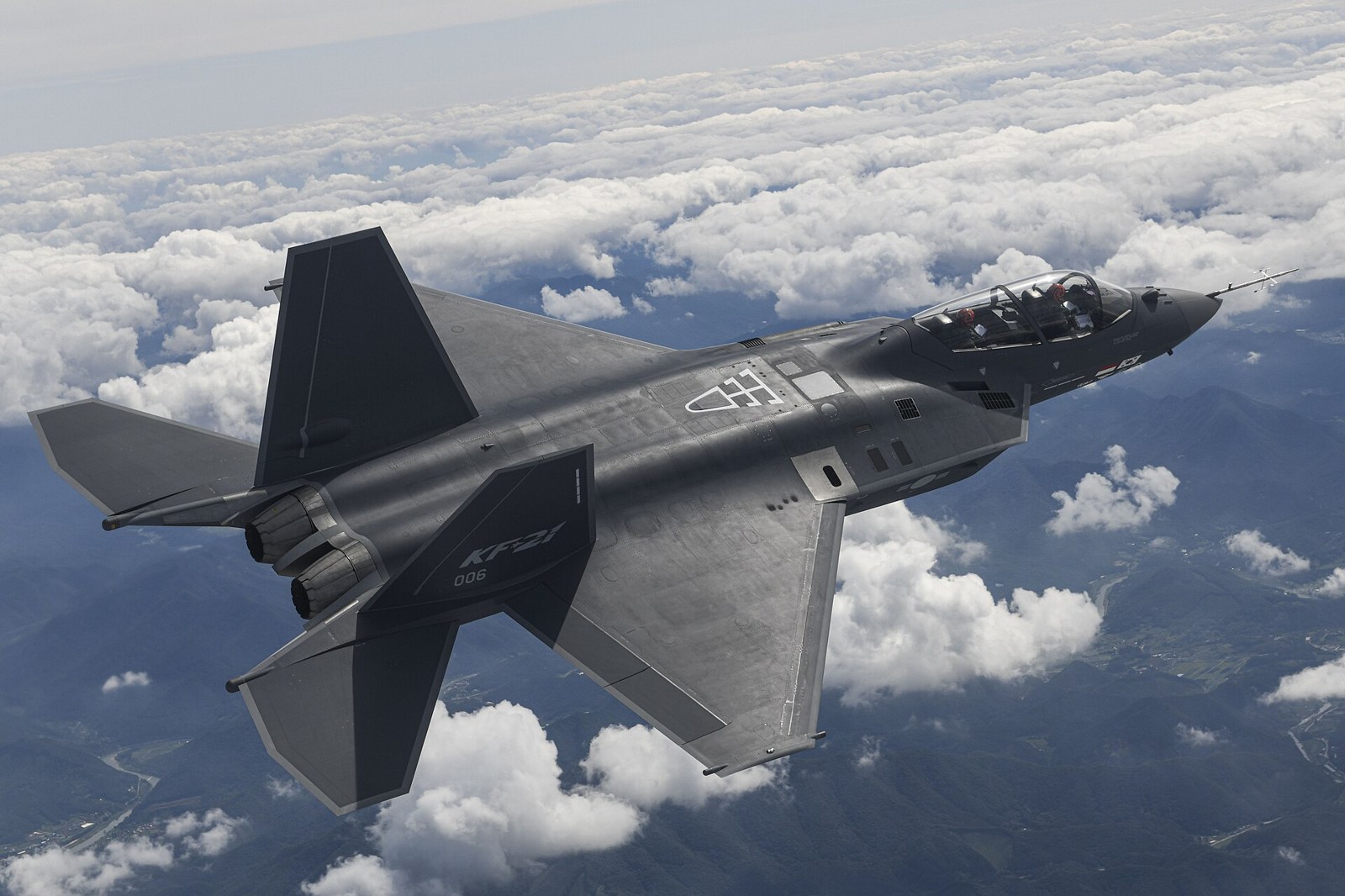
KAI went the other way. It began handing production KF-21 fighters to the Korean air force in September, and that revenue lifted profit. The growth came from a domestic program, so KAI's beat says little about how its export orders are doing.
3. How the stocks reacted to Iran-war headlines
On the day in May 2026 when preparations for an agreement to end the Iran war were officially confirmed, LIG D&A fell 12%, Hyundai Rotem 10% and Hanwha Aerospace 8%.
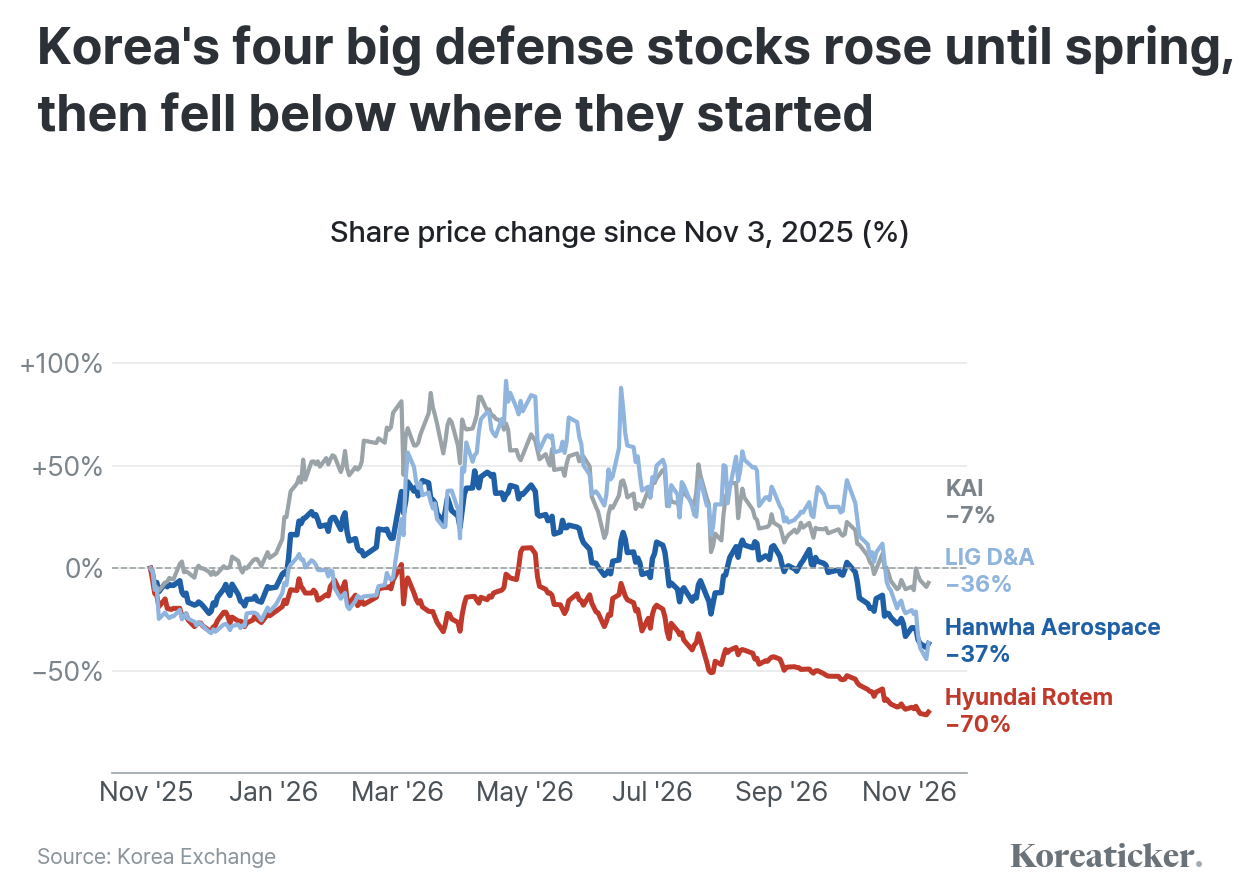
All four peaked between March and May. The United States and Israel struck Iran at the end of February, and Hanwha Aerospace rose about 20% in one day in early March.
A Korean lawmaker said Cheongung-II batteries deployed in the UAE fired about 60 interceptors and hit about 96% of their targets, the system's first use in combat. That record could outlast the war as a sales argument for LIG D&A in the Middle East.
The stocks also fell around ceasefire headlines in March, May and November. The timing suggests that expectations tied to the war affected sentiment, although price moves alone do not prove the cause.
Other demand would remain after a ceasefire: NATO members agreed in 2025 to raise defense spending to 5% of GDP by 2035, and Poland already spends close to 4.7%. Future budgets under that pledge could support more European orders, though section 5 shows Europe wants more of the work done in Europe.
4. Backlogs still cover three to seven years of revenue
Backlog is the value of contracts signed but not yet delivered and booked as revenue. Dividing it by a year's revenue gives a rough count of years of work; it is not a delivery schedule.
| Backlog, Sep 30, 2026 | 2025 revenue | Years of work | |
|---|---|---|---|
| Hanwha Aerospace (land systems) | about $26B | $6.0B | 4.3 |
| Hyundai Rotem (defense) | $7.1B | $2.4B | 3.0 |
| KAI (whole company) | $19.5B | $2.7B | 7.1 |
| LIG D&A (whole company) | $18.2B | $3.2B | 5.7 |
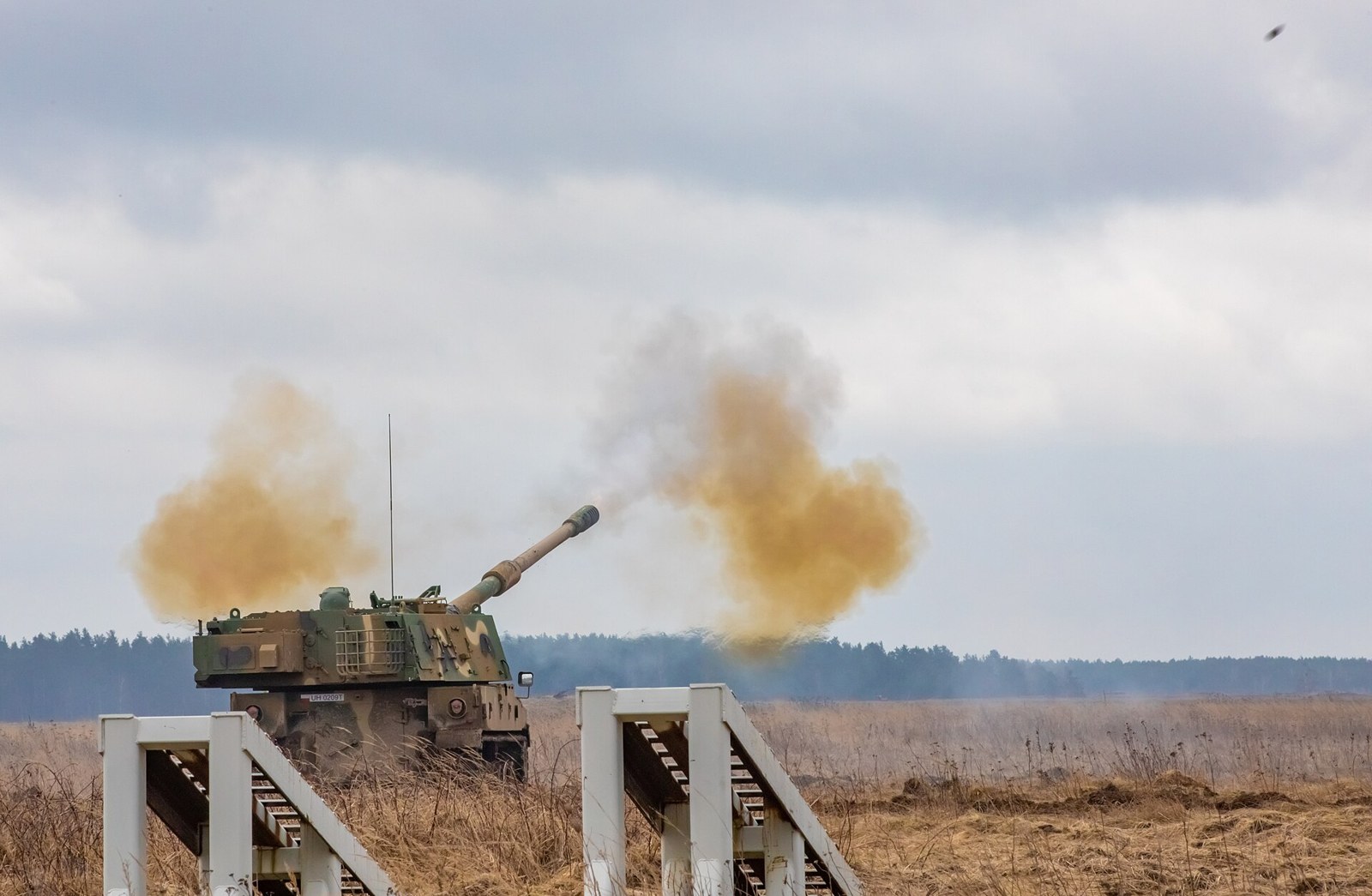
The rows do not cover identical scopes, and two need extra care. Hyundai Rotem as a whole has a backlog of about $21.6 billion, but roughly two-thirds is rail and other work with thin margins, so the total overstates the defense work that earns most of its profit.
KAI's figure mixes in other work too. Of KAI's $19.5 billion, about $7 billion is commercial airframe parts for Boeing and Airbus and about $8 billion is domestic programs, so most of KAI's long backlog does not depend on export weapons customers.
Two of the backlogs have started to shrink. Hanwha Aerospace's land systems backlog went from about ₩40 trillion at the end of March to about ₩35 trillion at the end of September, and Hyundai Rotem's defense backlog from about ₩10.5 trillion at the end of 2025 to ₩9.5 trillion.
The companies are turning backlog into revenue faster than they are replacing it. That keeps revenue coming for now, but if new orders stay at this year's pace, the work left in those two backlogs keeps falling.
None of the four appears close to running out of contracted work. Lockheed Martin's $292 billion backlog is about 3.6 years of its revenue, so apart from Hyundai Rotem's defense arm, the Korean companies hold more contracted work relative to revenue than the largest US contractor, on these rough measures.
5. Delivery speed, price and Europe's local-content rules
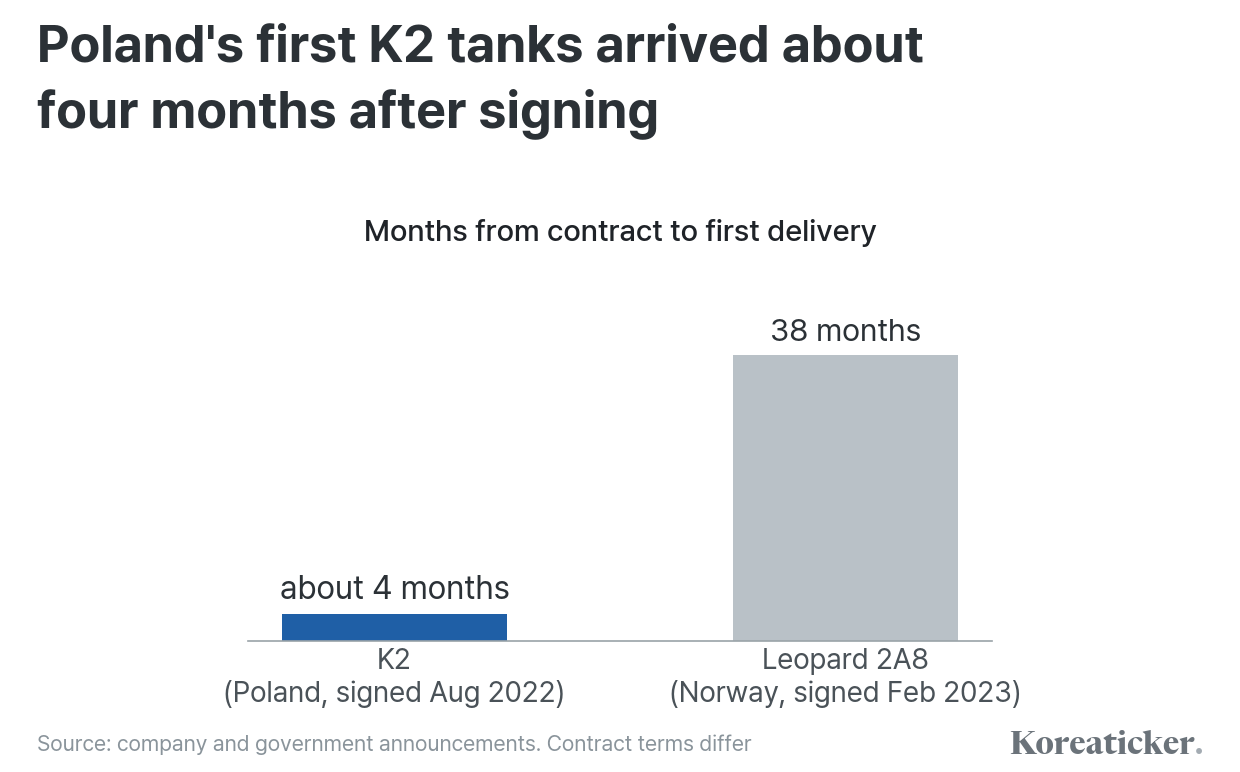
Poland received its first K2 tanks about four months after signing. Norway received its first Leopard 2A8 from Germany 38 months after signing.
The clearest advantages of Korean weapons are delivery speed and price. Contract terms differ from deal to deal, so treat these as examples.
On price, the Financial Times has reported that a Cheongung-II interceptor costs about $1.1 million, against about $3.7 million for a US-made PAC-3. In January 2026 Norway chose Chunmoo over the US-made HIMARS; its defense minister said Chunmoo was the only system that met all the requirements on performance, delivery time and cost.
The obstacle is Europe's push to buy European. The EU's €150 billion SAFE loan program for arms purchases requires at least 65% of a product's component cost to come from Europe. Korea has said it wants to join but has no agreement yet. Until it does, European buyers spending SAFE loans have a reason to choose European suppliers.
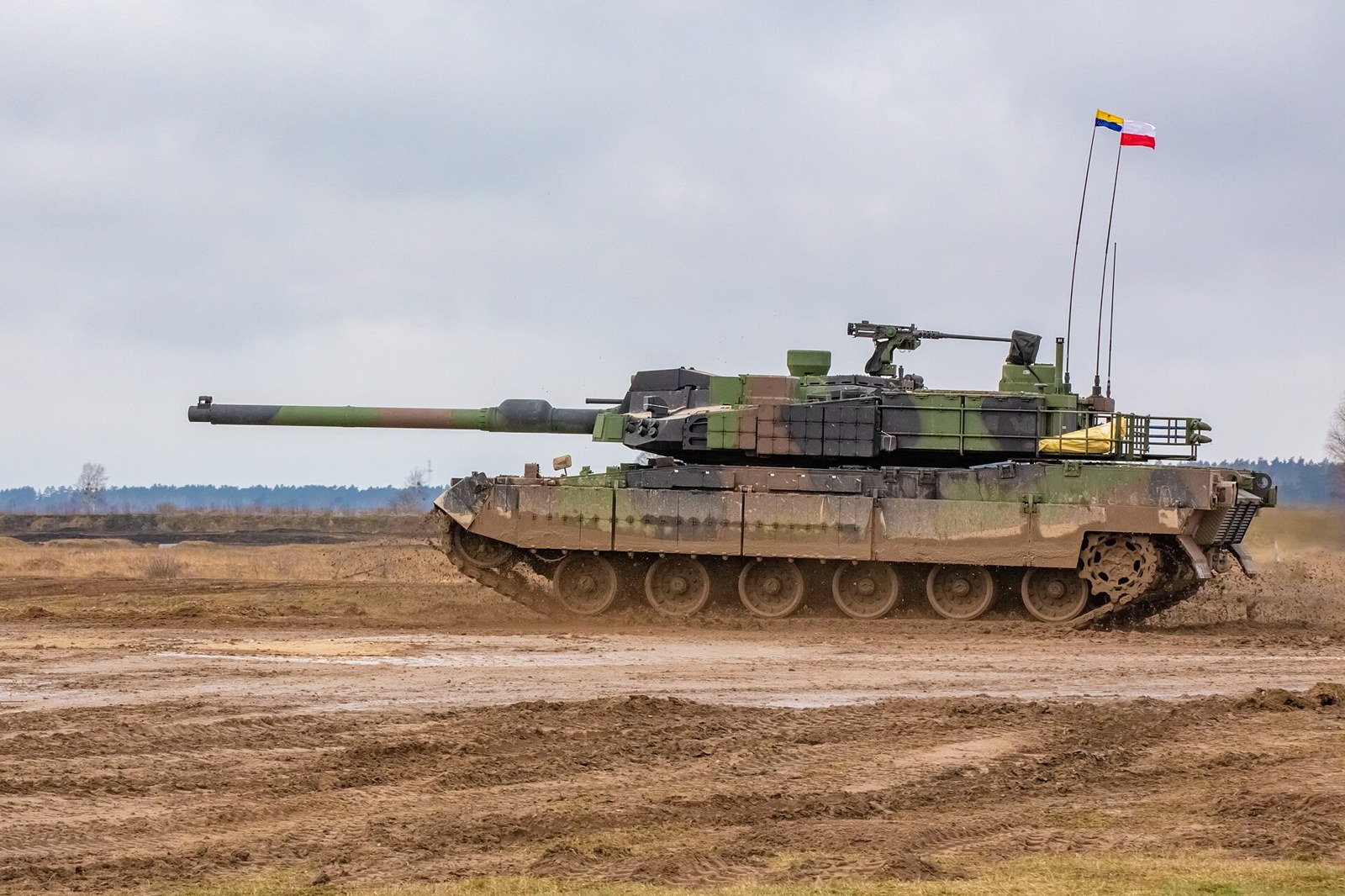
Recent contracts therefore come with local production: 61 of the 180 tanks in Poland's second K2 order will be built in Poland. Local production helps keep access to European contracts.
Its effect on margins has not been disclosed, though brokerages expect the second Polish contract to earn less than the first. If that holds for the second K2 contract, later deals with local production may not match the margins of the first Polish deals.
6. Against defense stocks elsewhere
Rheinmetall's share price is down about 45% in 2026. Over the same period Lockheed Martin is up about 25% and BAE Systems about 12%.
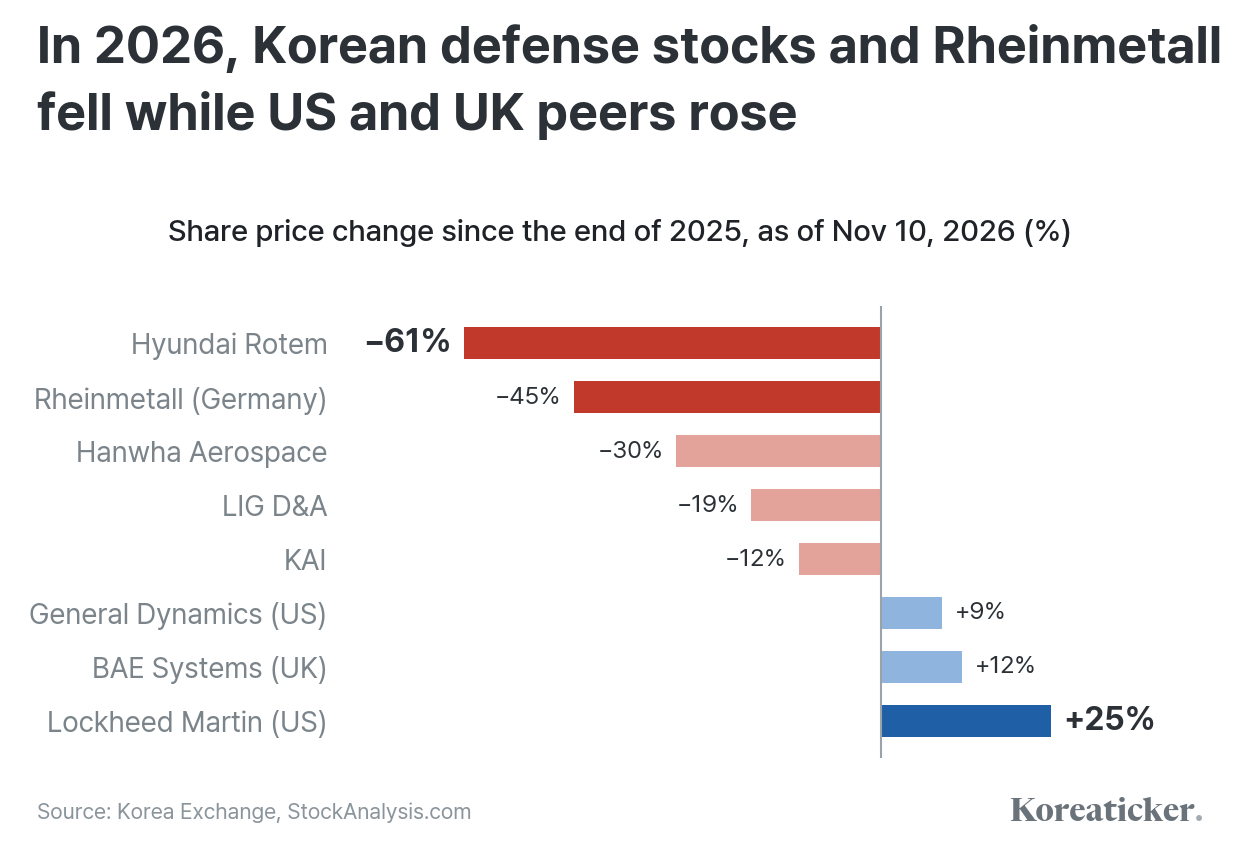
Defense stocks did not fall everywhere. Rheinmetall, which makes tanks and ammunition, cut its guidance twice this year. US and UK companies with a wider mix of aircraft, missiles and ships rose. So the Korean fall was not a verdict on defense stocks as a group.
In my view one likely factor is how far each stock had run. The Korean companies and Rheinmetall were the most direct bets on European rearmament and rose the most on it, so they had the most to give back when orders slowed. I have not tested that against other explanations.
7. What to watch
Backlog is work already won; new orders decide how quickly it gets replaced.
- Large contracts: the third K2 and K9 contracts with Poland, and further Cheongung-II orders in the Middle East
- Fourth-quarter deliveries: Hanwha Aerospace has guided to more than 30 K9s and 60 Chunmoo launchers for Poland this year
- The exchange rate: a stronger won lowers export margins further
Among the four, Hyundai Rotem has the shortest defense backlog and the steepest fall in new orders; KAI has the longest backlog and the only earnings beat, but the highest P/E.
Hanwha Aerospace has the widest product range and the largest single-quarter miss. LIG D&A has the Cheongung-II's combat record and, separately, a 24-month bidding restriction imposed by Korea's procurement agency in October, which a court has suspended for now. If the restriction comes back into force, LIG D&A could be shut out of that agency's bids for 24 months.
For US investors
How US investors can access these stocks
Stock profiles: Hanwha Aerospace, Hyundai Rotem, KAI, LIG D&A.
Step-by-step guide: this guide.
Sources and notes
- Hanwha Aerospace, Hyundai Rotem, KAI and LIG D&A, 3Q 2026 earnings releases (2026.10–2026.11)
- Annual and half-year reports filed with DART (2026.03, 2026.08)
- SIPRI, Trends in International Arms Transfers 2025 (2026.03)
- Korea Institute for Industrial Economics and Trade, Industrial Economy Issue No. 214 (2026.04)
- Seoul Economic Daily, 2026 arms export orders (2026.11)
- SBS, defense share prices at 52-week lows (2026.10)
- DS Investment & Securities, defense sector report (2026.07)
- Maeil Shinmun, defense share prices in October (2026.10)
- Breaking Defense, Norway's Chunmoo selection and the US Navy trainer program (2026.01, 2026.11)
- Asia Economy, citing the Financial Times, interceptor prices (2026.03)
- Lockheed Martin, General Dynamics, Rheinmetall and BAE Systems results (2026.07–2026.11)
- StockAnalysis.com, US share prices, P/E and ETF holdings (checked 2026.11.10)
Won converted at ₩1,350 per dollar. Korean results from DART filings and company releases. P/E and P/B use net profit for the 12 months to June 2026 and equity at June 30, 2026, both attributable to shareholders. Hanwha Aerospace's results include Hanwha Ocean.
Share prices are closing prices from the Korea Exchange on Nov 10, 2026. Years of work is backlog divided by 2025 revenue; Hanwha Aerospace's backlog figure is approximate, and Hyundai Rotem's defense revenue is from brokerage tables.
Photos from Wikimedia Commons: Staff Sgt. Matthew Foster, US Army (public domain), Republic of Korea Ministry of National Defense (KOGL Type 1).
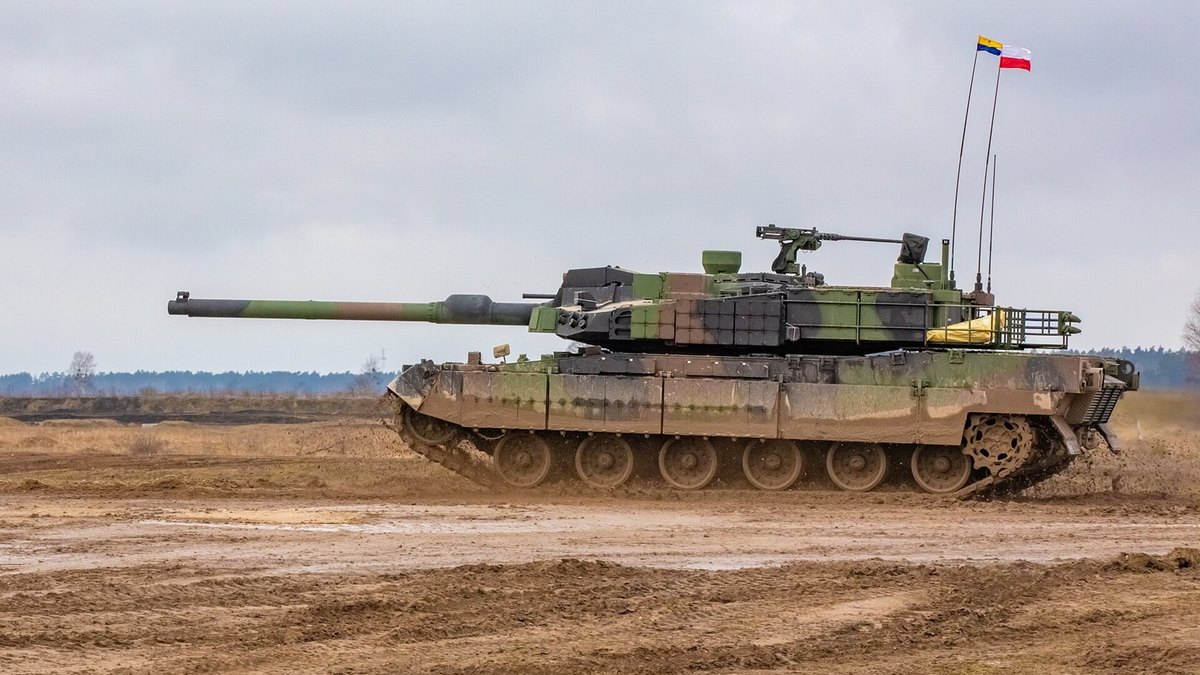
Cover photo: a Polish K2 tank, by Staff Sgt. Matthew Foster, US Army, credited above.
For information only, not investment advice. See our full disclaimer.
Update history
- Nov 14, 2026 Flagged earlier that the backlog-to-revenue figures cover different scopes, said what the company table means for a US holder, and reworded several shareholder lines after a reader-impression review. No figures changed.
- Nov 13, 2026 Added what each finding means for holders of the four stocks: why the timing of Polish contracts matters to three of the four; what lost and delayed bids do to future revenue; what the stronger won does to dollar contracts; why KAI's beat says little about exports; how the backlogs compare with Lockheed Martin's; and what local production in Europe could do to margins.
Corrections and changes to facts are listed here. See our editorial policy.