Korean Politics for Stock Investors: Who Holds Power and Which Laws Move the Market
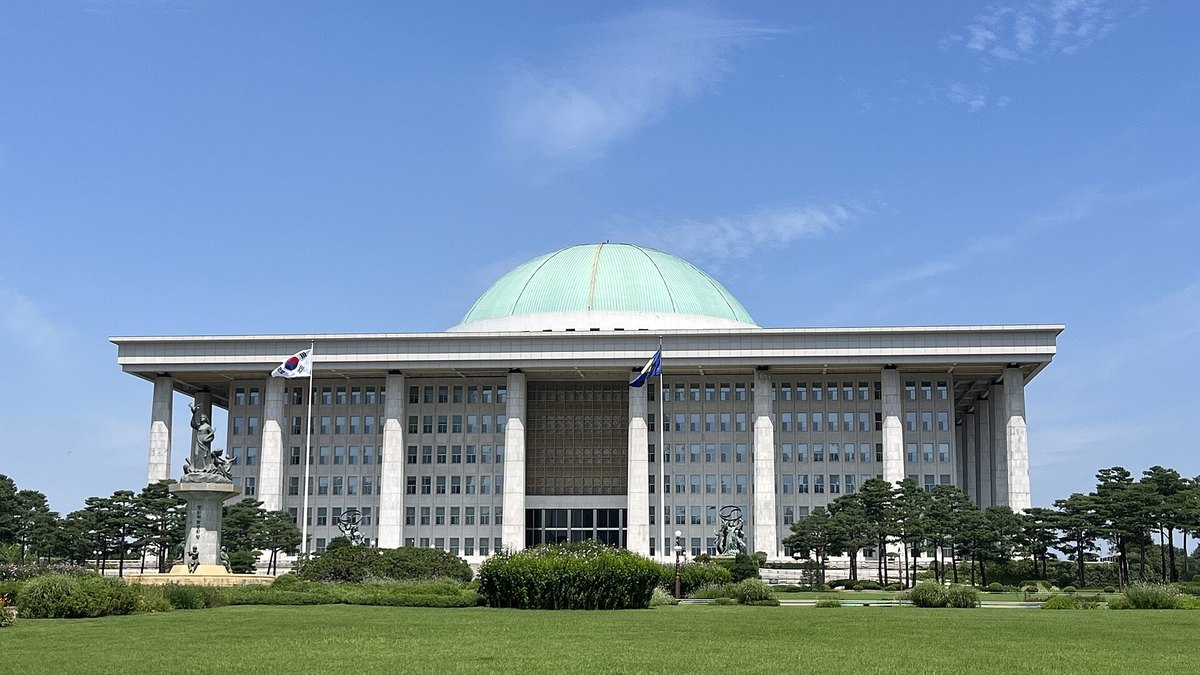
On the night of December 3, 2024, South Korea's president declared martial law. Six months later the country had a new one.
The market drop was over within eight sessions. The lawmaking that followed has run for 18 months: three amendments to the Commercial Act that change how listed companies treat outside shareholders, and a new tax rule on dividends for Korean residents. Which of these changes affect you if you own Korean shares?
The short answer
- As of June 4, 2026, the Democratic Party held the presidency and 161 of 300 National Assembly seats, a majority at that date, so repealing the new shareholder laws before the April 2028 election would need that majority's votes. We did not verify later changes.
- In won terms, the KOSPI fell 5.6% in the four sessions after martial law and was back near its December 3 level eight sessions later. Those are won prices; a dollar holder's loss and recovery also depended on the exchange rate.
- The laws that reach shareholders most directly are the Commercial Act amendments. They give outside shareholders more say over boards and, with exceptions, require treasury shares to be cancelled.
Who holds power now
President Lee Jae-myung of the Democratic Party took office on June 4, 2025, the day after the snap election. The constitution gives a president one five-year term with no re-election, so his term runs to June 2030.
The president can veto a bill; the National Assembly can override with two-thirds of those present. From 2022 to 2025 the presidency and the Assembly majority belonged to different parties. Now they belong to the same one, so bills the majority backs no longer face a likely veto, and laws the governing party favors can pass faster.
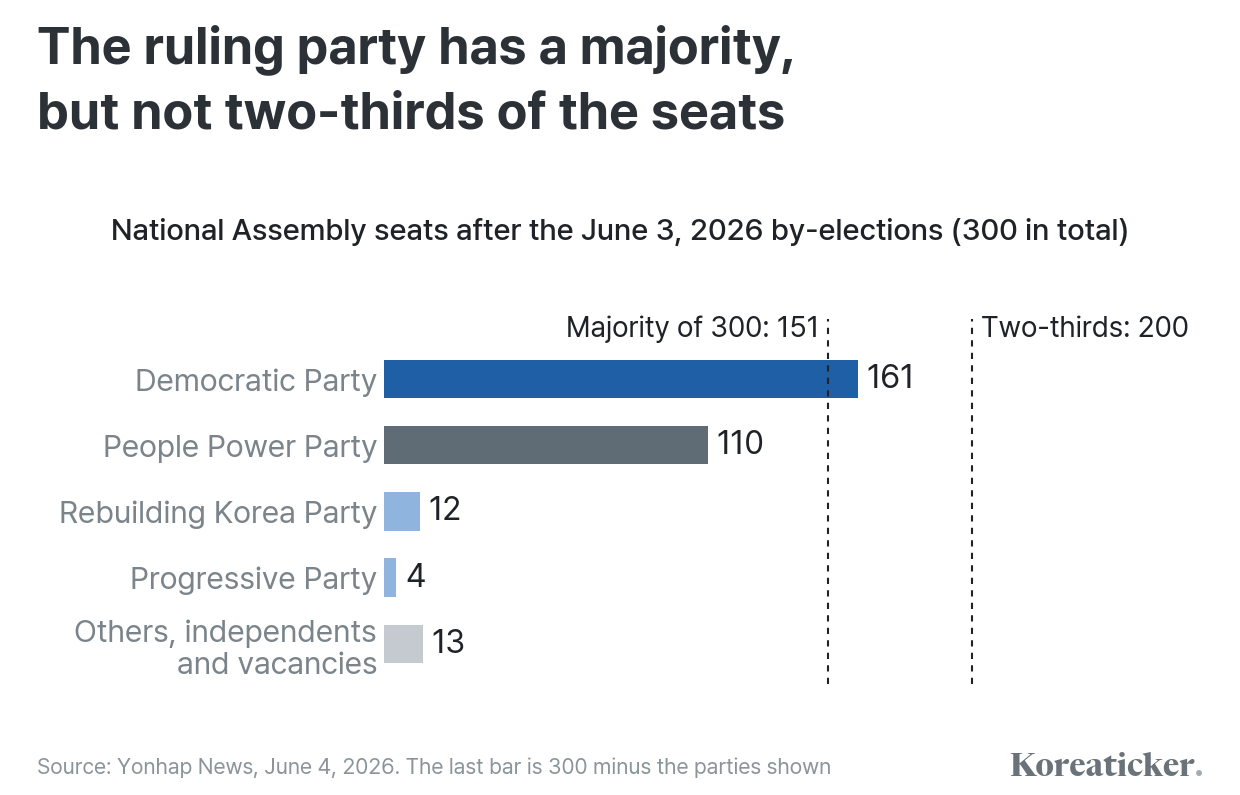
Tax and company laws pass with a majority of the members present, provided a majority of all members attend, so the governing party can pass them on its own. A constitutional amendment needs 200 votes and then a referendum.
The local elections of June 3, 2026, went the same way. The Democratic Party won 12 of the 16 races for big-city mayor and provincial governor, though it lost Seoul. Local offices do not vote on company or tax law, so for shareholders the Assembly seats above matter more.
What the market did, December 2024 to June 2025
| Date | Political event | KOSPI close, next session |
|---|---|---|
| Dec 3, 2024 | Martial law declared late at night, lifted within hours after the Assembly voted against it | Dec 4: 2,464.00 (−1.44%) |
| Dec 9, 2024 | Crisis continues; impeachment not yet passed | 2,360.58 (−2.78%), the lowest close of 2024 |
| Dec 14, 2024 | Assembly votes to impeach President Yoon Suk Yeol | Dec 16: 2,488.97 (−0.22%) |
| Apr 4, 2025 | Constitutional Court removes Yoon from office, 8 to 0 | Same day: 2,465.42 (−0.86%) |
| Jun 3, 2025 | Snap presidential election (market closed) | Jun 4: 2,770.84 (+2.66%) |
KOSPI closes in won, from Yahoo Finance daily data, checked against Asia Business Daily and Korea Herald reports.
On the night of martial law, the won weakened to 1,444.93 per dollar, its weakest level since October 2022, which cut the dollar value of Korean shares on top of the stock fall. By December 13, eight sessions after the declaration, the KOSPI closed at 2,494.46, within 0.3% of its December 3 close.
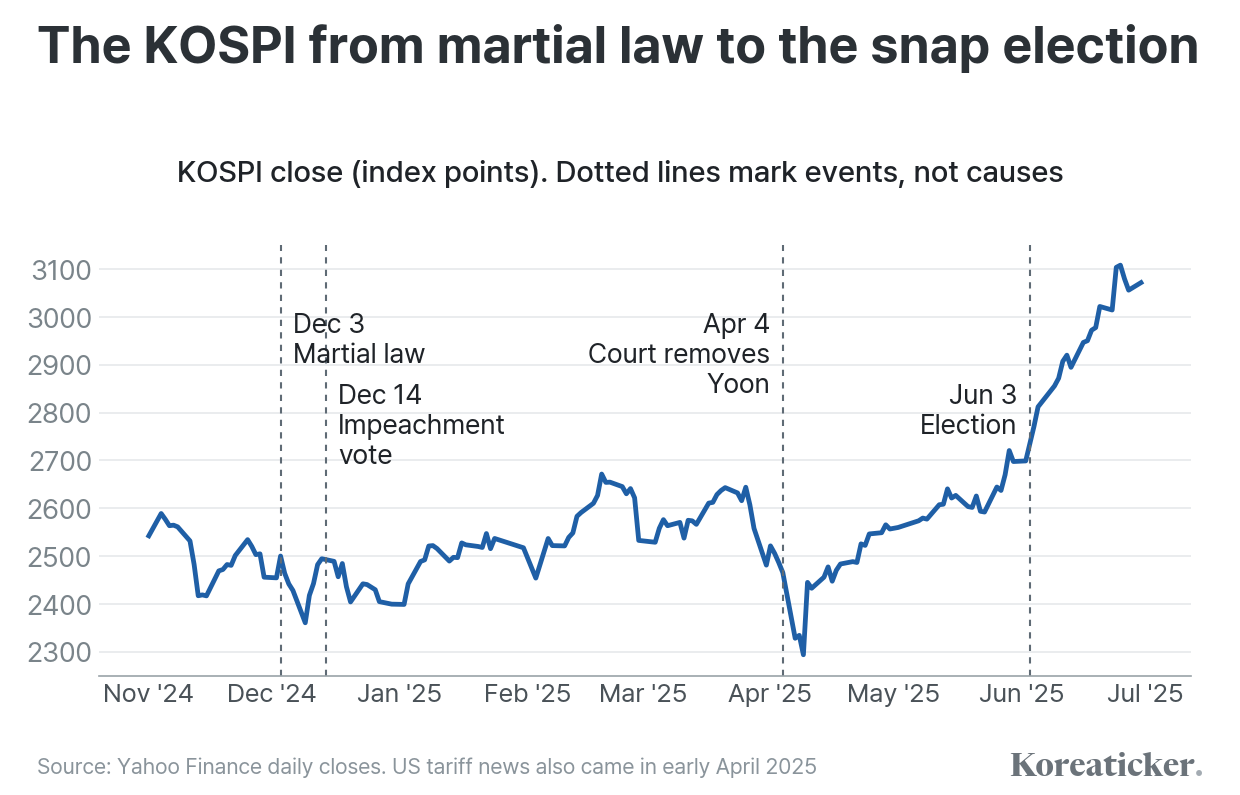
The court ruling of April 4, 2025, came two days after the US tariff announcement, and the KOSPI's 2025 low came on April 9 as tariff news continued, so the spring moves cannot be put down to politics alone. Nor do these numbers show what a longer crisis would cost a holder.
Votes on market laws
A planned tax on investment gains was scrapped on December 10, 2024, under President Yoon, by an Assembly the Democratic Party controlled. The dividend tax bill passed 201 to 18 on December 2, 2025. Votes on investor taxes have crossed party lines, so investor tax rules have not been one party's project alone.
On March 12, 2026, 226 of 242 members present backed the law for Korea's US investment fund. Both totals exceed the Democratic Party's 165 seats that Yonhap reported before the June 2026 by-elections, so members outside it voted yes. Whether that support would last after a change in power, the vote counts cannot tell us.
Laws that apply to listed companies
| Law | What changed | In force | Applies to |
|---|---|---|---|
| Commercial Act, first amendment | Directors owe their duty to shareholders as well as the company | Jul 22, 2025 | All companies |
| Commercial Act, third amendment | Treasury shares must generally be cancelled within one year; 18 months for shares held before the change | Mar 6, 2026 | Companies holding treasury shares, with exceptions for approved plans |
| Commercial Act, second amendment | Companies with ₩2 trillion or more in assets can no longer opt out of cumulative voting, and must elect at least two audit committee members separately | Sep 10, 2026 | Listed companies with ₩2 trillion or more in assets |
| Separate tax on dividends | Korean residents pay 14% to 30% on dividends from companies that pay out at least 40% of profit, or 25% with a 10% rise | 2026 dividends | Korean resident shareholders of companies that meet the payout tests |
| Yellow Envelope Act | Subcontractor unions can demand to bargain with a principal contractor that has real control over their work; limits on strike damage claims | Mar 10, 2026 | Companies with substantive control over subcontractors' working conditions |
| Short selling | Full return after a ban from Nov 3, 2023 | Mar 31, 2025 | All listed shares |
For a minority holder, the first amendment gives a legal footing to object when a board favors the controlling family. Cumulative voting makes it easier for outside shareholders to win a board seat at large companies.
Treasury shares carry no vote or dividend while the company holds them, but it can sell them back into the market; cancelling them removes that source of future dilution (Value-up index guide).
The Yellow Envelope Act could raise labor costs at companies that rely on subcontractors, if those unions bargain with them directly. The return of short selling lets investors bet against Korean shares again, which can add selling pressure on the stocks they target.
The dividend rule is a tax on Korean residents. It does not change the withholding on US investors. If companies raise payouts to meet its tests, though, foreign holders receive the larger dividend too; see Korean dividend tax for US investors.
Energy policy is still open. On January 26, 2026, the government kept plans for two new large reactors, due in 2037 and 2038, and left further additions to the next power plan. For holders of Doosan Enerbility (034020.KS) and KEPCO (015760.KS), any further large reactors at home would have to come through that next plan.
Pressures from outside
US tariffs. Under the November 2025 trade deal, Korea pledged $350 billion of US investment, $150 billion of it for shipbuilding, with a $20 billion yearly cap, and US tariffs on Korean cars fell to 15%, the rate now charged on cars Hyundai and Kia ship from Korea to the US.
For Hyundai and Kia holders, that 15% now applies to every car shipped from Korea. Since July 24, 2026, new Section 301 tariffs have brought most other Korean goods to 12.5%; Seoul says the 15% cap in the 2025 deal still holds. Industry by industry: What Trump Has Actually Said About Korean Industry.
MSCI. On June 23, 2026, MSCI did not add Korea to its watch list for developed-market status, citing limits on offshore won trading. Korea stays in MSCI's emerging-markets indexes, so the next chance to join the watch list is the June 2027 review. Holders hoping for index-fund buying from an upgrade should not expect it before then.
What to watch next
Most of what the new laws do for shareholders shows up in 2027, when companies have to act on them:
- Jan 26, 2027: Seoul High Court ruling on Yoon's insurrection appeal
- March 2027: first annual meetings where most December year-end companies must allow cumulative voting
- June 2027: MSCI's next annual market classification review
- Around September 2027: 18-month deadline to cancel treasury shares held before March 6, 2026
- April 2028: general election. President Lee backs a four-year, two-term presidency, which would need 200 Assembly votes and a referendum
- 2030: next presidential election
For US investors
How US investors hold Korean shares
Also in the series: this guide
Sources and notes
- National Election Commission results for the 2025 presidential election, via IFES ElectionGuide. electionguide.org ; turnout: Asia Business Daily (2025.06.03). asiae.co.kr
- Yonhap News, seats after the June 3, 2026 by-elections (2026.06.04). v.daum.net
- Reuters via The Star, local election results (2026.06.04). thestar.com.my
- Constitution of the Republic of Korea, Articles 49, 53, 70, 128 and 130. elaw.klri.re.kr
- CNBC (via NBC), won after martial law, LSEG data (2024.12.03). nbcmiami.com ; Asia Business Daily, KOSPI on Dec 9 (2024.12.09). asiae.co.kr ; Korea Herald, KOSPI after the election (2025.06.04). koreaherald.com
- Al Jazeera, Constitutional Court ruling (2025.04.04). aljazeera.com ; AP via ABC7, first-instance verdict (2026.02.19). abc7news.com ; Herald Business, appeal ruling date (2026.11.05). mbiz.heraldcorp.com
- Kim & Chang via Chambers, first and second Commercial Act amendments (2025.12.16) and third amendment (2026.05.14). chambers.com ; chambers.com ; Shin & Kim newsletter on effective dates (2026.04.13). shinkim.com
- Asia Business Daily, dividend tax vote (2025.12.02). view.asiae.co.kr ; KED Global, financial investment income tax repeal (2024.12.10). kedglobal.com ; Law Times, US investment act vote (2026.03.12). lawtimes.co.kr
- Asia Business Daily, Yellow Envelope Act in force (2026.03.09). asiae.co.kr ; Financial Services Commission, short selling (2025.03.24). fsc.go.kr
- Korea Herald, nuclear reactor decision (2026.01.26). koreaherald.com
- Asia Business Daily, US-Korea fact sheet (2025.11.14). asiae.co.kr ; KEIA on the $350 billion MOU. keia.org
- USTR, Section 301 forced labor action (2026.07.23). ustr.gov ; EY Tax News on rates and exclusions. taxnews.ey.com ; Korea Times on the 15% cap (2026.07.24). koreatimes.co.kr
- Herald Business, MSCI review (2026.06.24). biz.heraldcorp.com ; Korea Times, constitutional amendment (2026.08.15). koreatimes.co.kr
Seat counts are as reported on June 4, 2026, and can change with resignations and court rulings. KOSPI closes are from Yahoo Finance daily data (index ^KS11) and are price changes in won; we do not attribute them to any single event. The treasury share deadline is our count of 18 months from March 6, 2026.
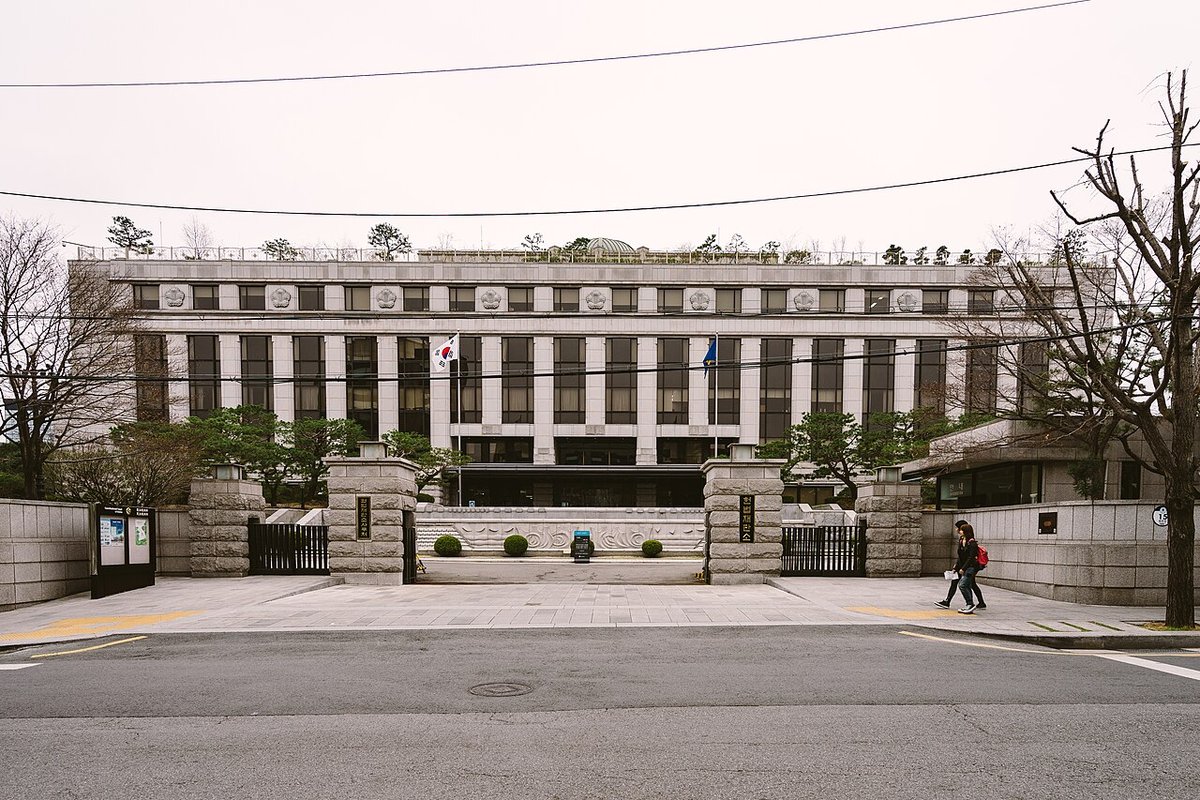
Photos from Wikimedia Commons: Wei-Te Wong (CC BY-SA 2.0), Cjb8293 (CC BY-SA 4.0).
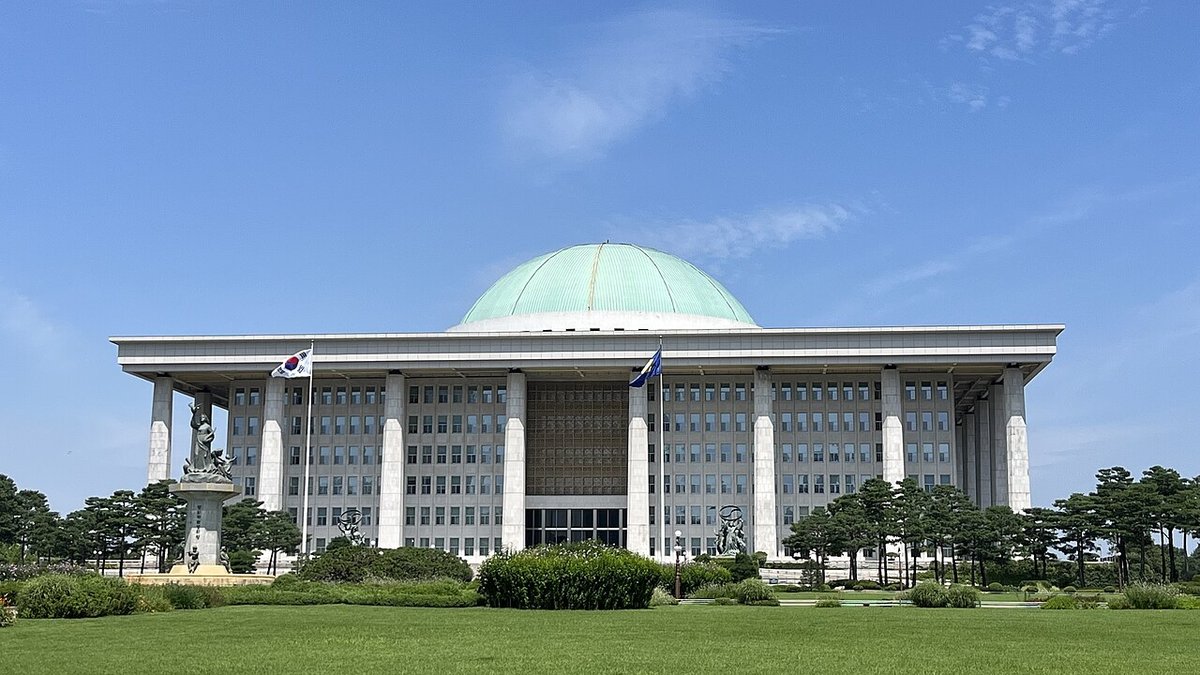
Cover photo: National Assembly Proceeding Hall, Seoul, by Cjb8293, CC BY-SA 4.0, via Wikimedia Commons.
For information only, not investment advice. See our full disclaimer.
Update history
- Nov 14, 2026 Said what the cross-party votes and the outside pressures mean for a holder, and reworded several lines after a reader-impression review. No figures changed.
- Nov 13, 2026 Rewrote each section around what the politics mean for someone who owns Korean shares: what one-party control means for the new laws, what the won did to a dollar holder after martial law, and what each law in the table changes for a minority holder. Cut the vote shares and turnout, the KOSPI's 2024 loss and the note on how the amendments are numbered.
- Nov 12, 2026 Corrected the timing of the April 4, 2025 court ruling: it came two days after the US tariff announcement, not at the same time.
Corrections and changes to facts are listed here. See our editorial policy.